Transparency first: This guide contains affiliate links. If we’re enrolled in an affiliate program, we may earn a commission at no extra cost to you — it never affects how we research or rank. Read our full affiliate disclosure policy.
A whetstone gives you more control over your knife’s edge than any electric machine or pull-through gadget — and once you’ve felt the difference, it’s hard to go back. Below are 10 stones worth buying in 2026, from an honest beginner kit with built-in angle guides to a splash-and-go ceramic favored for Japanese steel, plus the flattening plate that keeps them all cutting true. New to sharpening? Read honing vs sharpening first, and see our step-by-step how-to for the technique itself. If you’d rather skip stones altogether, see our best knife sharpeners for electric and guided-angle alternatives.
How we chose
We’re a research-led site, not a testing lab — we don’t run our own edge-retention rigs. We built this list from current 2025–2026 testing at Food & Wine, Men’s Journal and GearJunkie, specialist sharpening commentary from EdgePro, Sharpening Supplies and Japanese Knife Lab, and manufacturer specifications for grit, bond type and abrasive. Every stone below is independently confirmed as currently sold through the manufacturer or a major US retailer. These are simple, non-mechanical tools with no moving parts or recall history we could find in the CPSC database, but we always recommend a quick check yourself at the point of purchase. Prices move, so we use bands — $ (budget) to $$$$ (splurge) — and send you to the retailer for today’s number. Here’s our full method.
Diamond, ceramic or traditional waterstone?
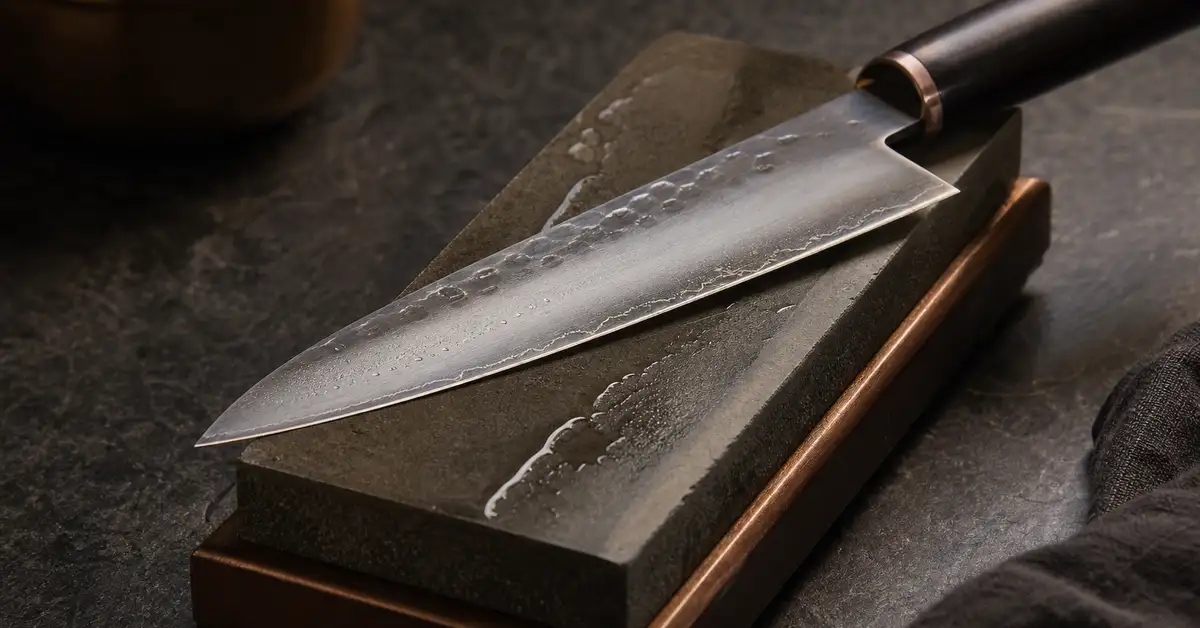
All whetstones abrade steel to reshape an edge, but the abrasive and bond differ in ways that matter. Diamond plates (like the Sharpal 162N) use bonded diamond particles on a steel or resin base — they cut fast, don’t dish or wear unevenly, and need no soaking, just a splash of water. Ceramic stones (like the Shapton Pro line) are synthetic and also largely splash-and-go, offering a smoother, more refined finish than diamond at a similar speed. Traditional waterstones (like Naniwa’s Traditional series) use a softer bond that releases fresh abrasive as you work, which self-renews the cutting surface but requires a genuine soak — typically 10–20 minutes — before use, and wears down (and dishes) faster, meaning more frequent flattening.
The best whetstones of 2026
1. Work Sharp Benchtop Whetstone
What it is: A dual-grit waterstone with interchangeable, snap-in angle guides that hold the knife at a consistent angle while you learn — removing the single hardest part of freehand stone work.
Best for: A first whetstone for someone who’s never sharpened freehand and wants training wheels while they build the feel for it.
Specs: 1000/6000 grit, dual-sided; interchangeable angle guides (commonly 15°/17°/20°); mess-reducing base; 3-year manufacturer warranty.
- Pros: Angle guides genuinely help beginners hold a consistent bevel; reputable brand with strong support; dual grit covers most routine sharpening in one stone.
- Cons: Some users still need practice to get consistent results even with the guides; guides limit freehand technique development long-term.
Why we trust it: Named the best whetstone for the money in current comparative testing, specifically praised for how approachable its angle guides make freehand-style sharpening for first-timers.
2. Sharp Pebble 1000/6000 Whetstone Kit
What it is: A dual-grit corundum waterstone bundled with its own angle guides and a non-slip base — a complete, low-cost entry point into stone sharpening.
Best for: A budget-conscious first stone for a home cook who wants everything needed to get started in one box.
Specs: 1000/6000 grit, dual-sided; aluminum oxide (corundum) abrasive; adjustable angle guides (15°/17°/20°/22°); non-slip base; requires a brief soak before use.
- Pros: Genuinely good value for a complete kit; angle guides make it approachable; 6000 side leaves a noticeably refined edge.
- Cons: The 6000 grit side wears faster than premium stones and needs more frequent flattening; best suited to intermediate rather than total-beginner technique for the fastest results.
Why we trust it: A recurring pick in current whetstone testing, with reviewers reporting a sharp, hair-shaving edge after a routine sharpening session straight out of the box.
3. Sharpal 162N Dual-Grit Diamond Whetstone
What it is: A dual-grit diamond plate that skips the soaking step entirely — just a splash of water and you’re sharpening, with a durable surface that resists the dishing that wears down softer stones.
Best for: Cooks who want a low-maintenance stone that’s ready the moment they pick it up, with no soak-time planning required.
Specs: 8″ x 3″ dual-grit diamond plate; coarse and fine sides; works with water or light lubricant; no soaking required; includes a storage base.
- Pros: Ready to use instantly, no soak time; diamond surface stays flat far longer than waterstones; durable enough to last years of regular use.
- Cons: Diamond abrasive can be more aggressive than needed on very hard, brittle Japanese steels below about 60 HRC if used carelessly; less refined finish than a dedicated ceramic finishing stone.
Why we trust it: Named the “Best Sharpening Stone” in a current major knife-sharpener roundup, cited for its durable, low-maintenance dual-grit design.
4. King KDS #1000/6000 Combination Whetstone
What it is: A long-running, respected combination waterstone that pairs a forgiving 1000-grit sharpening side with a genuinely smooth 6000-grit polishing side, at a price that undercuts most premium combo stones.
Best for: A cook who’s comfortable with basic freehand technique and wants a proven, no-frills combo stone without premium pricing.
Specs: 1000/6000 grit, dual-sided; bonded synthetic waterstone; suitable for steels up to roughly 62 HRC on the 1000 side; requires soaking before use.
- Pros: Excellent tactile feedback on the 1000 side; buttery-smooth 6000 side; strong reputation among enthusiasts as a top budget combo stone.
- Cons: The 6000 side is soft and wears (and dishes) faster on very hard steels, meaning more frequent flattening; needs a proper soak before each session.
Why we trust it: Specialist sharpening reviewers who have tested dozens of combination whetstones consistently rank the King KDS among the very few combo stones worth buying at its price point.
5. Shapton Pro 1000 Kuromaku Ceramic Whetstone
What it is: A splash-and-go ceramic stone widely considered the anchor of more professional and enthusiast sharpening kits than any other single stone — fast enough to reset a dull edge, refined enough to skip a soak.
Best for: An enthusiast home cook, especially one with harder Japanese steel, who wants a single reliable medium stone that handles most routine sharpening.
Specs: 1000-grit ceramic waterstone (Kuromaku series); splash-and-go, minimal soaking; stays flatter longer than traditional waterstones; pairs well with finer stones for polishing.
- Pros: Exceptional balance of cutting speed and refinement; resists dishing better than softer traditional stones; genuinely excellent on hard, brittle Japanese steel.
- Cons: Single-grit, so a second stone is needed for coarse repair or fine polishing; freehand angle control still takes practice.
Why we trust it: Widely described by specialist retailers as the stone that anchors more sharpening kits than any other, and singled out in current whetstone testing for results that outpaced its price point.
6. Naniwa Traditional 1000 Grit Stone
What it is: A classic bonded waterstone from one of the most respected Japanese stone makers, at a medium grit that’s genuinely popular for how effectively it refines an edge.
Best for: A cook who enjoys the ritual of soaking a stone and wants the self-renewing cutting surface that a true waterstone provides.
Specs: 1000-grit medium stone; 8.25″ x 2.75″ x 0.75″; traditional bonded waterstone construction; needs roughly a 20-minute soak before use; should not be stored in water.
- Pros: Excellent balance of value and quality within Naniwa’s range; genuinely popular medium grit for refining an edge; strong reputation among enthusiasts.
- Cons: Requires a real soak before every session; softer bond means it dishes faster than ceramic or diamond alternatives and needs regular flattening.
Why we trust it: Consistently described by specialist retailers as an excellent balance of price and quality within the Naniwa lineup, with the 1000-grit specifically noted as a popular choice for genuinely refining an edge.
7. Naniwa Traditional 220 Grit Stone
What it is: An extra-coarse stone from the same respected Naniwa line, built specifically for repairing damaged edges and setting a new bevel — not a stone for routine touch-ups.
Best for: Repairing a chipped or badly nicked edge, or resetting the bevel angle on a knife that’s never been properly sharpened.
Specs: 220-grit extra-coarse stone; same 8.25″ x 2.75″ x 0.75″ format as the Traditional line; traditional bonded waterstone; requires soaking before use.
- Pros: Removes steel quickly to repair damage or reset a bevel; matches the quality and consistency of Naniwa’s respected Traditional line; pairs naturally with the 1000 as a two-stone starter set.
- Cons: Far too aggressive for routine sharpening or touch-ups; a specialist repair tool, not an everyday stone; wears down quickly given how much material it removes.
Why we trust it: Specialist sharpening retailers specifically recommend the 220 grit for establishing a new bevel or repairing extremely dull or nicked blades, distinguishing it clearly from medium and fine grits meant for maintenance.
8. Naniwa Snow White 8000 Grit Stone
What it is: A premium, high-grit finishing stone for polishing an edge to a mirror-like apex once the shaping and refining stages are done — the last stop for enthusiasts chasing maximum sharpness.
Best for: An experienced sharpener who already owns a medium stone and wants to add a genuine polishing step, especially for hard Japanese steel.
Specs: 8000-grit fine finishing stone; part of Naniwa’s premium synthetic stone range; requires a light soak or splash depending on model; best paired with a medium stone rather than used alone.
- Pros: Genuinely polishes an already-sharp edge to a noticeably finer finish; well-regarded within Naniwa’s premium lineup; ideal complement to a 1000-grit stone.
- Cons: Not useful on its own — needs a coarser stone first to actually shape the edge; premium pricing for a single-purpose stone; overkill for most everyday kitchen knives.
Why we trust it: A recognized entry in Naniwa’s respected premium stone range, specifically positioned by specialist retailers as a finishing stone for enthusiasts chasing a refined, polished edge.
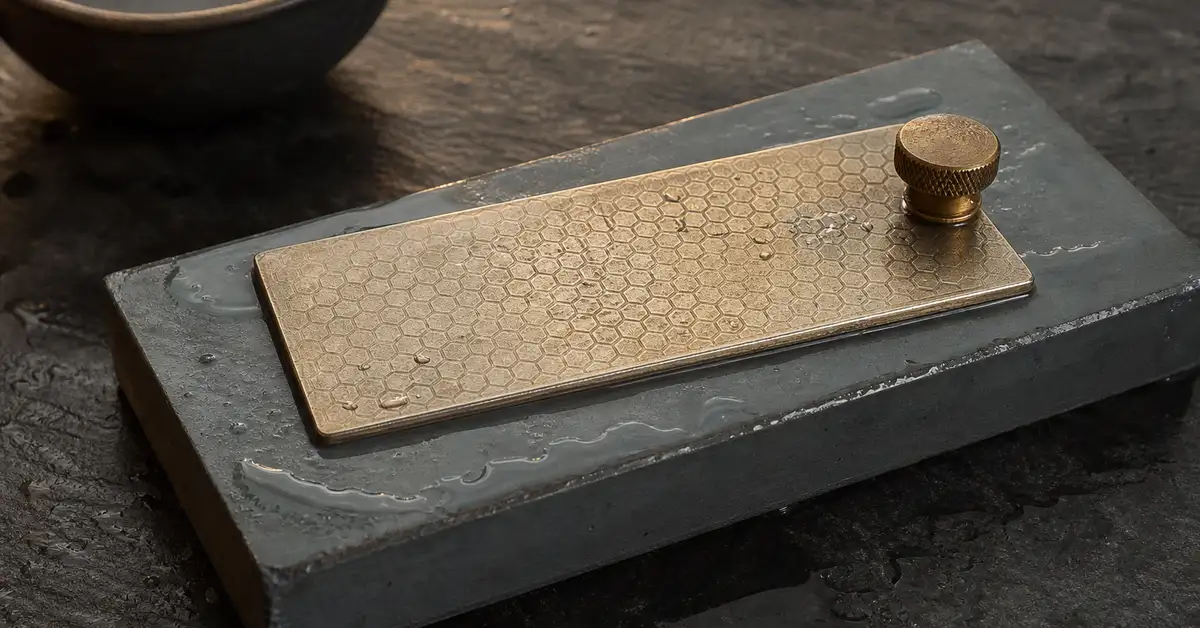
9. Atoma #400 Diamond Flattening Plate
What it is: Not a sharpening stone itself, but the tool every waterstone owner eventually needs — a precision diamond plate that flattens a dished, unevenly worn stone back to true.
Best for: Anyone who owns a traditional waterstone (like the Naniwa picks above), which will dish unevenly with use and needs periodic flattening to sharpen correctly.
Specs: 400-grit diamond plate; diamond abrasive in a dot-matrix pattern on a stainless steel sheet, mounted to a rigid aluminum base; also usable for chip repair on very coarse jobs.
- Pros: Exceptionally flat and stays that way over years of use; doesn’t stick to stones the way cheaper flattening plates can; genuinely necessary maintenance tool, not a nice-to-have.
- Cons: An added cost on top of the stones themselves; another tool to store; not needed if you only own diamond or ceramic stones that don’t dish.
Why we trust it: Widely described by specialist sharpening retailers as the gold-standard flattening plate, prized for staying precisely flat and not sticking to stones the way lower-quality alternatives do.
10. Sharp Pebble Large 3-Sided Whetstone (400/1000/6000)
What it is: A larger three-grit stone that adds a genuine coarse-repair surface to the standard 1000/6000 combo, covering everything from chip repair to polishing in a single purchase.
Best for: A cook who wants one larger stone that handles occasional edge repair as well as routine sharpening and polishing, without buying three separate stones.
Specs: 400/1000/6000 grit across a larger-format stone; aluminum oxide construction; requires soaking before use; larger surface area than the standard 1000/6000 kit.
- Pros: Covers coarse repair through fine polishing in one stone; larger surface makes long strokes easier; good value compared to buying three separate stones.
- Cons: Larger format needs more storage space and a bigger soaking container; same maintenance needs as any traditional waterstone (soaking, flattening).
Why we trust it: An expansion of the well-reviewed Sharp Pebble 1000/6000 kit, adding a genuine coarse grit for repair work that the standard kit lacks.
Whetstones compared
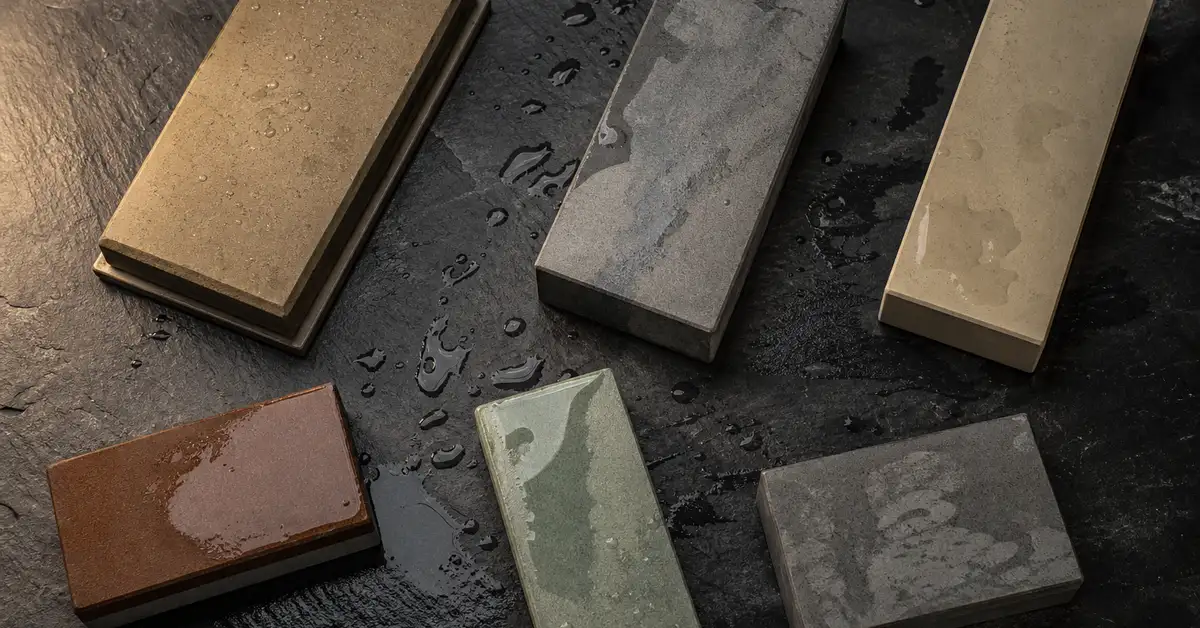
| Stone | Type | Grit | Soaking? | Price |
|---|---|---|---|---|
| Work Sharp Benchtop | Waterstone + angle guides | 1000/6000 | Yes | $ |
| Sharp Pebble 1000/6000 Kit | Waterstone + angle guides | 1000/6000 | Yes | $ |
| Sharpal 162N | Diamond plate | Dual-grit | No | $–$$ |
| King KDS Combo | Traditional waterstone | 1000/6000 | Yes | $ |
| Shapton Pro 1000 | Ceramic | 1000 | Splash-only | $$ |
| Naniwa Traditional 1000 | Traditional waterstone | 1000 | Yes | $$ |
| Naniwa Traditional 220 | Traditional waterstone | 220 | Yes | $$ |
| Naniwa Snow White 8000 | Premium synthetic | 8000 | Light soak | $$$ |
| Atoma #400 (flattening) | Diamond plate | 400 | No | $$ |
| Sharp Pebble Large 3-sided | Waterstone | 400/1000/6000 | Yes | $$ |
How to choose a whetstone
A few honest questions narrow the field faster than any spec sheet:
- Have you sharpened freehand before? If not, start with a stone that includes angle guides (Work Sharp Benchtop, Sharp Pebble kit) rather than a bare stone.
- Do you want to skip soaking? Diamond plates (Sharpal) and most ceramic stones (Shapton) are splash-and-go. Traditional waterstones (Naniwa, King) need a real soak every session.
- Are your knives Western or Japanese steel? Harder Japanese steel benefits from ceramic or fine synthetic stones over aggressive diamond, which can micro-chip brittle edges if used carelessly at low grits.
- Do you need repair or just maintenance? A single medium stone (1000 grit) handles most routine sharpening. Only add a coarse stone if you’re repairing chips or resetting a bevel, and a fine stone only once you’re chasing a genuinely polished edge.
Frequently asked questions
What grit whetstone should I start with?
A 1000-grit medium stone handles the vast majority of routine sharpening and is the right single-stone starting point for most home cooks. Add a coarser stone (around 220–400 grit) only if you need to repair chips or reset a bevel, and a finer stone (3000–8000 grit) only once you want to polish an already-sharp edge further.
Do all whetstones need soaking?
No. Traditional bonded waterstones, like Naniwa’s Traditional line or the King KDS, need a real soak (commonly around 20 minutes) before use. Diamond plates and most modern ceramic stones, like the Sharpal 162N and Shapton Pro line, are splash-and-go and need only a splash of water.
How often do I need to flatten a whetstone?
It depends on the stone and how often you use it. Softer traditional waterstones dish unevenly relatively quickly and may need flattening every few sessions with regular use. Diamond plates and ceramic stones resist dishing and need flattening far less often. A dedicated flattening plate, like the Atoma #400, is the standard tool for the job.
Is a diamond whetstone bad for Japanese knives?
Not inherently, but caution is warranted. Some sharpening specialists advise against aggressive diamond abrasives on Japanese steels below about 60 HRC, since the combination of a hard abrasive and relatively brittle steel can risk micro-chipping if pressure or angle is mismanaged. A ceramic or fine synthetic stone is often a gentler choice for these knives, especially for the finishing stages.
Can a whetstone replace a honing rod?
No, they do different jobs. A whetstone removes steel to reshape a dull or damaged edge and should be used occasionally (a few times a year for most home cooks). A honing rod realigns a rolled edge without removing much metal, and should be used far more often — ideally before or during most cooking sessions. See honing vs sharpening for the full breakdown.
How do I know what angle to sharpen at on a whetstone?
Western knives are typically ground around 20–22° per side, while Japanese knives run more acute, roughly 12–15° per side. Angle-guide stones like the Work Sharp Benchtop or Sharp Pebble kit remove the guesswork for beginners; freehand sharpeners often use visualization tricks or simple paper-folding methods to approximate the angle until muscle memory develops. See our step-by-step how-to for the full technique.
The verdict
If you’ve never sharpened freehand, start with the Work Sharp Benchtop or the Sharp Pebble 1000/6000 kit — both include angle guides that make the learning curve far less intimidating. If you want a low-maintenance stone with no soaking, the Sharpal 162N diamond plate is ready the moment you pick it up. Enthusiasts and owners of Japanese knives should look hard at the Shapton Pro 1000 or the Naniwa Traditional line, and anyone building out a full stone kit will eventually want an Atoma flattening plate to keep it all cutting true. Whatever you choose, pair it with regular honing — see honing vs sharpening and our best knife sharpeners for the rest of a complete edge-care routine.
Sources & method: Performance and ranking claims drawn from Food & Wine, Men’s Journal and GearJunkie’s 2025–2026 testing; grit-progression and abrasive-type guidance from EdgePro, Sharpening Supplies and Japanese Knife Lab; specifications independently verified against manufacturer and specialist-retailer product pages (Work Sharp, Sharp Pebble, Sharpal, King/Burrfection Store, Shapton/ChefKnivesToGo, Naniwa/Sharpening Supplies, Atoma/Cutlery and More). Screened against the US Consumer Product Safety Commission (CPSC) recall database; no active recalls found for the recommended stones or brands as of 2026. We don’t physically test sharpening stones ourselves — here’s how we choose.