A good wood cutting board is one of the kindest things you can do for your knives — but only if you actually look after it. Skip the care routine and a wood board can crack, warp, or turn into a bacteria trap; get it right and the same board will outlast most of your kitchen gear while keeping your edges sharper for longer. Here’s the full routine: washing, drying, oiling, and the occasional deeper refresh. Haven’t picked a board yet? See our best cutting boards to compare wood, rubber and composite options first. (Updated for 2026.)
What you’ll need
Mild dish soap and a soft sponge or brush, a clean dry towel, and food-grade mineral oil (sometimes labeled butcher block oil) — never a cooking oil like olive or vegetable oil, which turns rancid over time. A beeswax-and-mineral-oil board butter or board wax is optional but helps the oil last longer between applications. For deeper refreshes, fine-grit sandpaper (220–320 grit) is useful for smoothing out knife marks or stains.
How to care for a wood cutting board, step by step
1. Wash by hand after every use
Wash with warm water, mild dish soap, and a soft sponge or brush immediately after use, working with the direction of the grain rather than scrubbing hard across it. Rinse thoroughly so no soap residue is left behind. Never put a wood board in the dishwasher — the prolonged soaking, heat, and drying cycle are exactly what causes wood to crack, warp, and split along the grain.
2. Dry it immediately and stand it upright
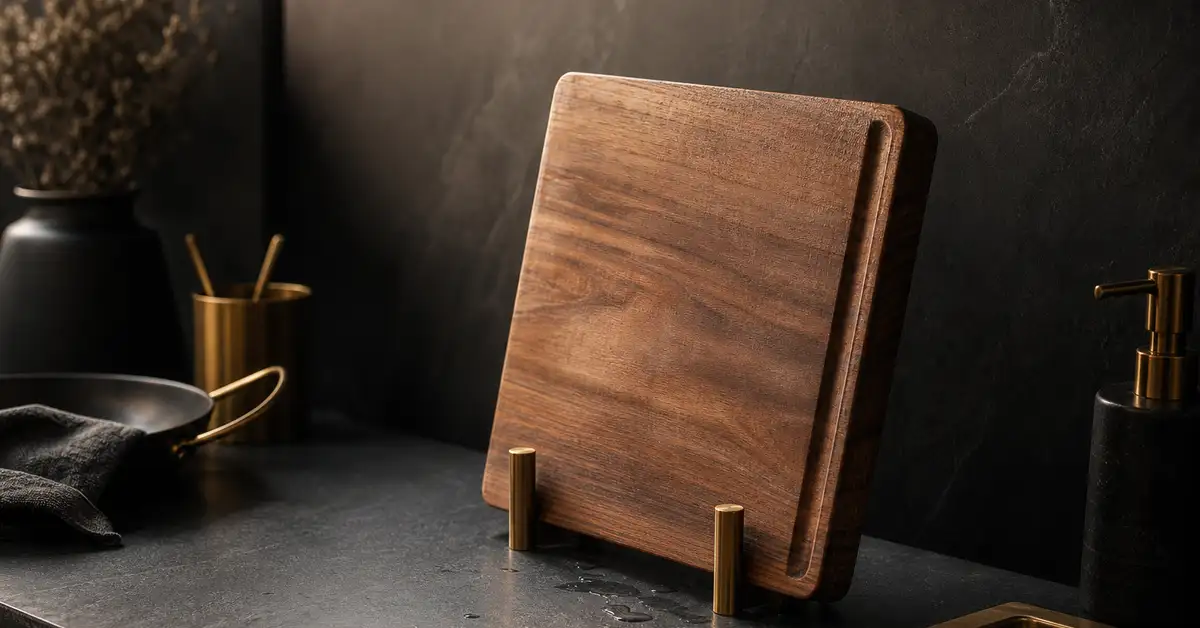
Towel-dry both faces right away, then stand the board on its edge, propped against a wall or in a dish rack, so air can reach both sides evenly. Never leave a wood board flat and wet on a counter or in a sink — trapped moisture against one face is one of the most common causes of warping, since the wet side expands while the dry side doesn’t.
3. Never soak it or leave it wet
Don’t let a wood board sit in a sink full of water or soapy suds while you finish the rest of the dishes. Wood is porous, and extended soaking drives moisture deep into the fibers, which can cause swelling, cracking as it dries back out, and gives bacteria far more time to take hold than a quick wash-and-dry cycle ever would.
4. Sanitize occasionally, without bleach soaking
For a deeper clean after cutting raw meat or fish, scrub with a paste of coarse salt and half a lemon, or wipe the surface with a diluted white vinegar solution, then rinse and dry as usual. Avoid soaking the board in bleach or any chlorine solution — a quick wipe of a very dilute solution is fine if you feel you need it, but full immersion drives moisture into the wood the same way regular soaking does.
5. Oil it regularly with food-grade mineral oil
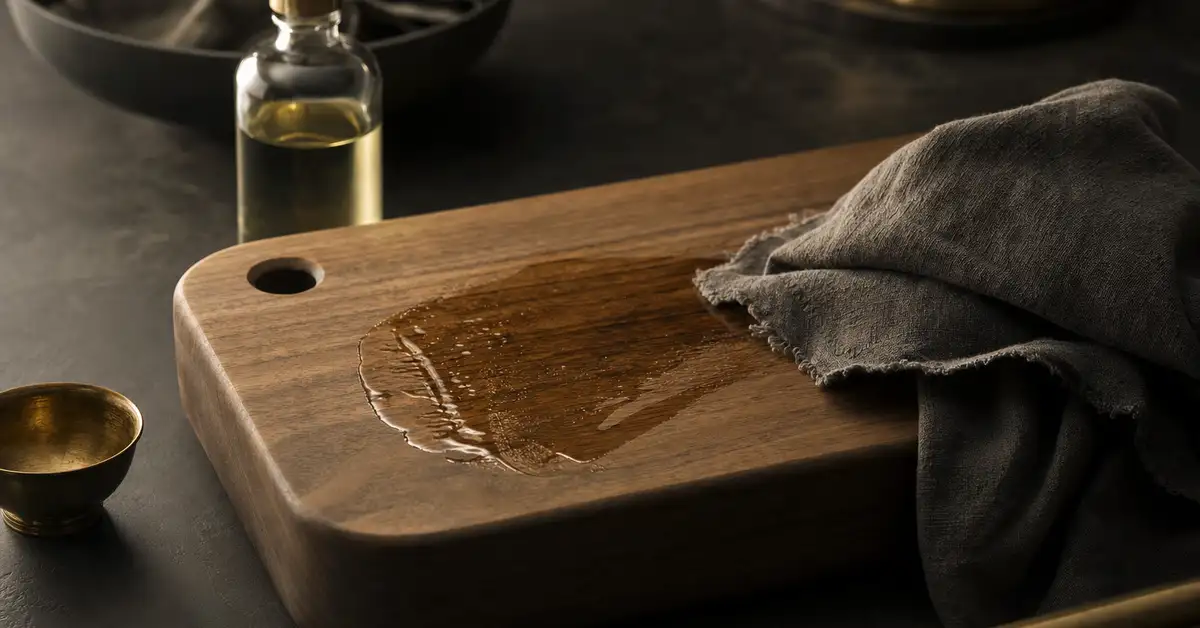
Once the board is completely dry, apply a generous, even coat of food-grade mineral oil with a clean cloth, working it into the grain on both faces and the edges. Let it soak in for a few hours or overnight, then wipe off any excess. Do this roughly once a month for a board in regular use, and more often if the wood starts looking dry, pale, or is absorbing water instead of beading it up. Never use olive, vegetable, or other cooking oils — they oxidize and turn rancid, leaving the board smelling off.
6. Follow with a board butter or wax to seal (optional)
After oiling, a beeswax-and-mineral-oil board butter or board wax adds a light protective seal that helps the oil last longer between applications and gives the surface a subtle sheen. Buff a thin layer in with a cloth once the oil coat has fully absorbed. This step isn’t strictly necessary, but it stretches out how often you need to reoil a board that sees daily use.
7. Sand out deep knife marks or stains when needed
Once or twice a year, or whenever the surface gets visibly rough, deeply scored, or stained, sand lightly with 220–320 grit sandpaper following the direction of the grain, wipe away the dust, and re-oil generously. This resets the surface and removes the grooves where bacteria and odors can otherwise build up over time.
Signs your board needs attention now
- Water beads up less than it used to: the wood has dried out and is due for oiling — a well-oiled board should make water bead rather than soak straight in.
- Visible cracks or splits: oil deeply and often, and if a crack runs through a significant portion of the board, consider replacing it — a compromised board can trap bacteria and eventually fail structurally.
- Persistent odors after washing: a sign the surface may need sanding to remove built-up grooves and residue, followed by fresh oil.
- Warping or rocking on the counter: usually caused by uneven drying; keep the board stored upright and away from direct heat or sun going forward.
Don’t have a wood board yet?
End-grain, edge-grain, rubber or composite — we’ve honestly compared the boards that are actually worth buying in 2026.
Frequently asked questions
How often should I oil a wood cutting board?
Roughly once a month for a board in regular daily use, and more often — even weekly at first — for a brand-new board or one that’s been neglected. A board that’s well-conditioned should make water bead on the surface rather than soak straight in.
Can I use olive oil or vegetable oil on a cutting board?
No. Cooking oils like olive, vegetable, or canola oil oxidize over time and turn rancid, leaving the board smelling and tasting off. Always use a food-grade mineral oil or a purpose-made board oil, which stays stable and won’t spoil.
Is it safe to put a wood cutting board in the dishwasher?
No. The combination of prolonged soaking, high heat, and forced-air drying in a dishwasher is one of the fastest ways to crack, warp, or split a wood board. Always wash wood boards by hand and dry them promptly.
How do I get rid of stains or odors on a wood board?
A scrub with coarse salt and half a lemon, or a wipe-down with diluted white vinegar, handles most everyday stains and odors. For deeper or older stains, light sanding with 220–320 grit sandpaper followed by fresh oiling will reset the surface.
Why is my wood cutting board warping?
Warping is usually caused by uneven moisture — one face drying faster or slower than the other, often from leaving a board flat and wet on a counter, or storing it near a heat source or in direct sun. Standing the board upright to dry evenly on both faces, and storing it away from heat, largely prevents this.
When should I replace a wood cutting board instead of repairing it?
Sanding and oiling resolve most surface wear, but a board with a deep crack running through a large portion of it, or one that’s split into separate pieces, should be replaced — a structurally compromised board can trap bacteria in ways sanding can’t fix, and may fail while you’re cutting on it.
The bottom line
A wood cutting board rewards a little routine maintenance far more than almost anything else in the kitchen: hand-wash and dry it promptly, never let it soak, oil it monthly with food-grade mineral oil, and sand it back to fresh once or twice a year. Do that consistently and a good board will keep your knives happier and outlast most of your other kitchen gear. If you’re still choosing a board, see our best cutting boards for picks across wood, rubber and composite materials.
Sources & method: Care guidance synthesized from current wood-care and food-safety writing at Serious Eats, America’s Test Kitchen, Good Housekeeping, and The Spruce Eats, alongside manufacturer care instructions from board makers covered in our cutting-board research. We don’t physically test boards ourselves — here’s how we choose.