Wood or plastic — it’s the cutting-board debate that never quite settles, and both sides have a point. Wood feels traditional and is genuinely gentler on a knife edge; plastic feels safer because you can throw it in the dishwasher. The honest answer is that the food-safety research doesn’t back up the assumption most people make, and the right board for you depends on what you’re cutting, not just which material sounds more hygienic. This guide lays out what the evidence actually shows on bacteria, plus the real differences in edge-friendliness, maintenance and cost. If you just want a specific board, see our best cutting boards; for the knife itself, start with our chef’s knife guide.
The short answer
Wood is gentler on a knife edge and, despite the common assumption, is not less sanitary than plastic when cared for properly — current USDA and university food-safety research finds hardwood boards resist and even reduce surface bacteria, while a heavily knife-scarred plastic board can trap bacteria in its grooves. Plastic’s real advantage is convenience: it’s dishwasher-safe, needs no oiling, and is easy to replace once scarred. Most food-safety guidance now recommends owning at least one of each — a dishwasher-safe plastic or composite board for raw meat and fish, and a wood or rubber board for produce, bread and cooked food. We’re a research-led site and don’t run our own lab bacteria tests; the findings below are drawn from USDA guidance and published food-science research, cross-checked against our own board and knife guides. Here’s our full method.
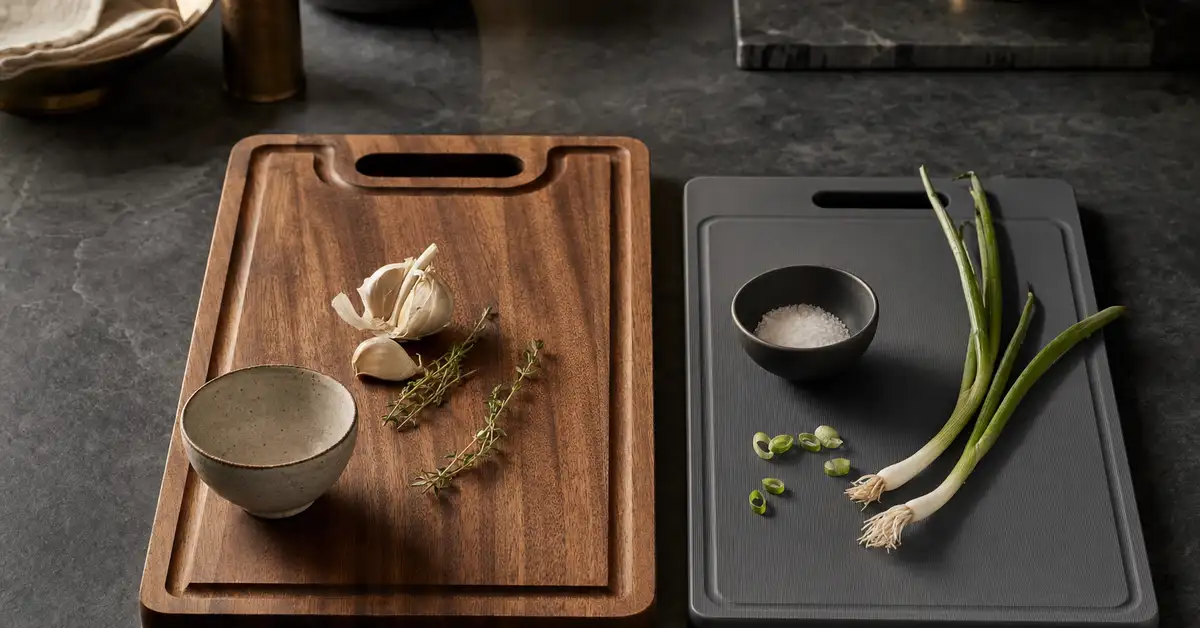
Edge-friendliness: why wood and rubber protect a blade better
A sharpened edge tapers to a few microns wide, and every cut puts real, localized pressure on that thin strip of steel. Cut on a surface that gives slightly under the blade — wood, rubber, or a soft fiber composite — and that pressure spreads out like a shock absorber. Hard plastic (specifically high-density polyethylene, or HDPE, the material in most rigid plastic boards) is noticeably firmer than wood, so it returns more of that force straight back into the edge with every cut. It’s not as punishing as glass or stone, but over months of daily use, most cooks who own genuinely good knives notice their edge needs honing more often on a hard plastic board than on wood, rubber or a softer composite. See our best cutting boards for the specific materials — hinoki, synthetic rubber and Richlite composite among them — that split the difference between wood’s gentleness and plastic’s convenience.
Food safety: what the research actually says
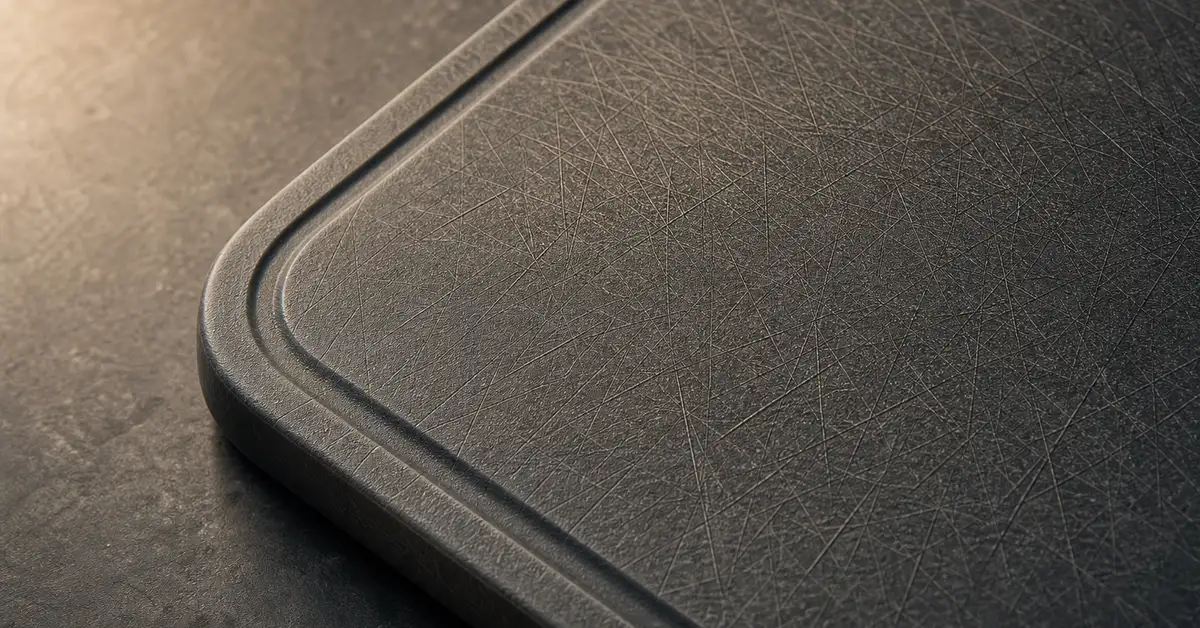
The assumption that plastic is more sanitary than wood because it’s non-porous is older than the research that eventually tested it. The USDA’s Food Safety and Inspection Service permits either wood or nonporous surfaces such as plastic, glass or pyroceramic for cutting raw meat and poultry at home, and the FDA Food Code likewise allows hardwood boards. The landmark research behind that guidance — dating back to a UC Davis food-science study and repeatedly reproduced since — found that bacteria placed on a wood cutting board’s surface tend to be drawn down into the wood and die off, rather than surviving on the surface where they could transfer to food; plastic, by contrast, doesn’t absorb bacteria, but a plastic board that’s been cut into repeatedly develops knife grooves that can shelter bacteria and are hard to clean out even in a dishwasher. More recent testing on hardwood species including maple has found a significant drop in detectable E. coli within a couple of hours on the board’s surface, even without cleaning. None of this means an old, heavily scarred board of either material is safe — replace any board, wood or plastic, once its surface is deeply gouged and can no longer be cleaned effectively.
| Wood | Plastic (HDPE) | |
|---|---|---|
| Edge-friendliness | Good to excellent (softer woods like hinoki or walnut gentlest) | Fair — firmer surface returns more force to the edge |
| Bacteria behavior (USDA / food-science research) | Draws bacteria below the surface, where it’s less likely to transfer and tends to die off | Non-porous, but knife-scarred grooves can shelter and trap bacteria |
| Dishwasher-safe | No — heat and moisture warp, crack or split wood | Yes, in most cases |
| Maintenance | Hand-wash, dry promptly, oil periodically | Wash after use; replace once deeply scarred |
| Typical lifespan | Years to decades with care | Months to a few years, then replace |
| Commercial-kitchen use | Restricted in many commercial settings (hard to verify sanitation by sight, absorbs moisture/odors) | Standard in most commercial kitchens |
| Typical price | $–$$$$ | $ |
Maintenance: the trade-off you’ll actually live with
Plastic’s real advantage is low-effort maintenance: wash it (dishwasher or by hand), let it dry, and use it again. Wood asks for more: hand-wash and dry it promptly rather than letting it soak, stand it on edge to air out, and oil it every few weeks with a food-safe mineral or board oil to keep it sealed against moisture — see our full wood cutting board care routine for the specifics. Skip that maintenance and a wood board can crack, warp or dry out; a plastic board doesn’t need it, but it does need replacing once its surface is too grooved to clean properly, which for a heavily used board can happen well within a year or two.
Which should you buy?
A few honest questions narrow it down faster than any lab result:
- What are you cutting most often? If it’s mostly raw meat and fish, a dishwasher-safe plastic board is the practical, easy-to-sanitize choice. If it’s mostly produce, bread and cooked food — the bulk of most home cooks’ prep — a wood board is kinder to your knives and, cared for properly, no less safe.
- Will you actually keep up with wood’s maintenance? Be honest. If hand-washing, drying and periodic oiling isn’t going to happen consistently, a plastic or composite board that tolerates the dishwasher will serve you better than a neglected wood board.
- Do you own knives worth protecting? If you’ve invested in a good chef’s knife or a Japanese-style blade, the edge-friendliness case for wood, rubber or a soft composite gets stronger — see our best cutting boards for picks chosen specifically with that in mind.
- Do you need more than one board? Most food-safety guidance recommends exactly that: a plastic or composite board dedicated to raw meat and fish, and a separate wood or rubber board for everything else. That combination gets you plastic’s easy sanitizing where it matters most, and wood’s edge-friendliness for daily prep.
Ready to choose a specific board?
See our full, independently verified shortlist across both materials:
Frequently asked questions
Is wood or plastic more sanitary for cutting boards?
Neither is automatically more sanitary — it depends on condition and care. USDA guidance permits either material, and food-science research has found that bacteria tend to be drawn below a wood board’s surface and die off, while a plastic board’s knife grooves can shelter bacteria that are hard to clean out. A heavily scarred board of either material, cleaned poorly, is the real risk.
Can wooden cutting boards go in the dishwasher?
No. The heat and prolonged moisture in a dishwasher will warp, crack or split a wood board. Hand-wash wood boards with hot, soapy water, dry them promptly, and stand them on edge to air out fully.
Which is gentler on knife edges, wood or plastic?
Wood, generally. It gives slightly under a blade the way rigid plastic (HDPE) doesn’t, so it returns less force to the edge with every cut. Softer woods like hinoki or walnut, and materials like synthetic rubber, are gentler still — see our best cutting boards for specific picks.
When should I replace a cutting board?
Once the surface — wood or plastic — is so deeply gouged by knife cuts that you can no longer clean it effectively, it’s time to replace it. For plastic, that’s often within a year or two of daily use; a well-maintained wood board can last many years longer since its surface can be sanded and refreshed.
Do I need both a wood and a plastic cutting board?
Most food-safety guidance recommends it: a dishwasher-safe plastic or composite board dedicated to raw meat and fish, and a separate wood or rubber board for produce, bread and cooked food. This limits cross-contamination and keeps your more knife-friendly board out of harsh raw-meat sanitizing cycles.
Why do commercial kitchens mostly use plastic, not wood?
Mainly for verification and cleaning practicality, not because wood is unsafe. Wood can’t reliably go through a commercial dishwasher’s heat and chemical cycle, absorbs moisture and odors more readily under heavy daily use, and its condition is harder to verify by sight at scale — all real operational concerns in a high-volume commercial setting that matter less in a home kitchen with careful hand-washing.
The bottom line
Wood and plastic aren’t really competing on safety — done right, both are safe, and the food-safety research doesn’t support treating plastic as the automatically hygienic choice. The real trade-off is edge-friendliness and convenience: wood treats your knives better and asks more of you in return; plastic asks almost nothing of you and is the more practical choice for raw meat and fish. Most well-equipped kitchens end up with one of each. For specific boards across both materials, see our best cutting boards, and for the knife you’re protecting, our chef’s knife guide.
Sources & method: Food-safety guidance from the USDA Food Safety and Inspection Service and FDA Food Code on approved cutting-board materials; bacteria-behavior findings drawn from published food-science research on wood versus nonporous cutting surfaces, including university studies on hardwood species; edge-mechanics context cross-checked against our best cutting boards guide. We’re a research-led site and don’t run our own lab bacteria tests — here’s how we choose.