Transparency first: This guide contains affiliate links. If we’re enrolled in an affiliate program, we may earn a commission at no extra cost to you — it never affects how we research or rank. Read our full affiliate disclosure policy.
The chef’s knife is the one tool that earns its place in your hand every single day. It’s the knife you’ll reach for to dice an onion, break down a chicken, mince garlic, or halve a squash — realistically about eighty percent of everything you prep. Buy the right one and cooking gets faster, cleaner and a lot more pleasant; buy the wrong one, or let a good one go dull, and every meal starts with a small fight. This guide walks you through what actually matters — the anatomy, the steel, the edge, the size, the balance and the care — in plain language, so you can choose a knife that fits your hands and your kitchen. When you’re ready for specific recommendations, see our pick of the best chef’s knives; if you’d rather understand the “why” first, read on. (Updated for 2026, and researched the way we research everything.)
What a chef’s knife actually does
A chef’s knife is a general-purpose blade, usually 6 to 10 inches long, designed to do the widest range of kitchen jobs well rather than any single job perfectly. Its gently curved edge lets you rock through herbs and garlic, its length gives you the reach to slice and portion, and its height keeps your knuckles off the board. That versatility is exactly why it’s the first knife worth spending real money on: a good paring knife or bread knife is a nice-to-have, but the chef’s knife is the workhorse you’ll actually use. Learn to choose and maintain one well and you’ve solved most of your kitchen’s cutting needs in a single purchase.
It helps to know what a chef’s knife is not. It isn’t a cleaver (built for heavy chopping through bone), a santoku (a shorter, flatter Japanese all-rounder), a paring knife (for small in-hand work) or a serrated bread knife. Those are specialists. The chef’s knife is the generalist that does most of what the others do, most of the time — which is why getting this one right matters more than any other blade in the block.
The anatomy of a chef’s knife
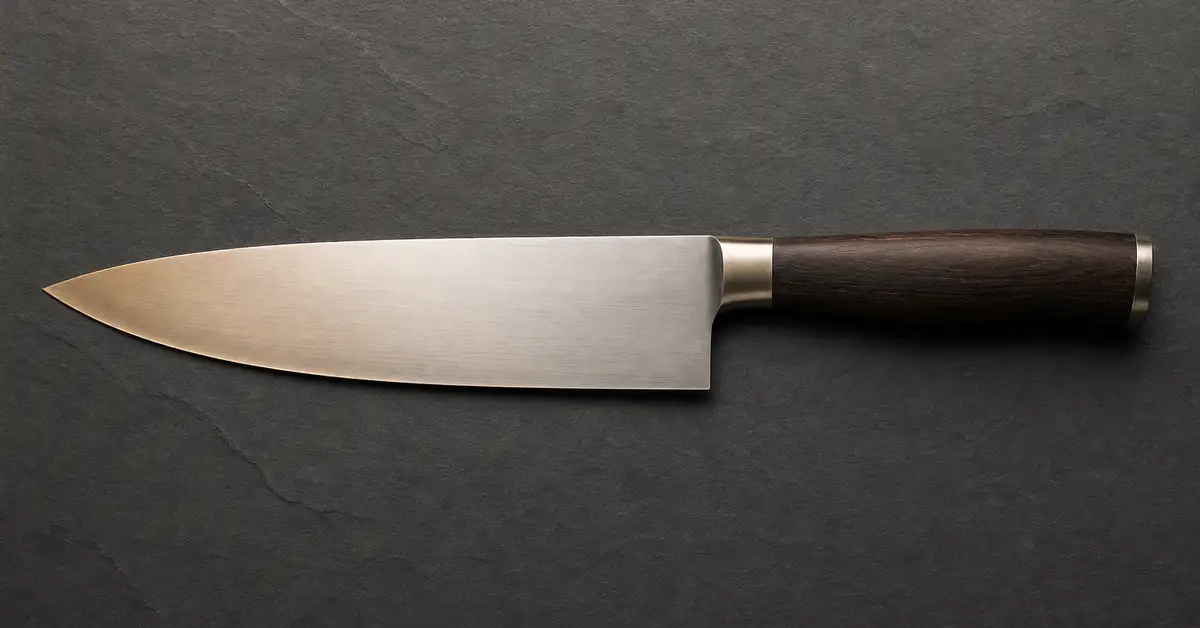
Before you can judge a knife, it helps to know what you’re looking at. Most of the trade-offs between knives come down to a handful of parts and how they’re built.
- Tip: the front quarter of the blade, tapering to a point. You use it for delicate, precise work — scoring, fine slicing, and getting into tight spaces.
- Point: where the edge and the spine meet at the very front. It’s what you use to pierce, and to make a starting cut.
- Edge: the sharpened cutting line that runs the length of the blade from point to heel. Everything about how a knife cuts starts here.
- Belly: the curved section of the edge between tip and heel. A pronounced belly (typical of German knives) is what lets you rock-chop; a flatter profile (typical of Japanese blades) favors a push or pull cut.
- Heel: the rear of the edge, and the widest, strongest part of the blade. It’s where you put your power for tougher jobs like winter squash or carrots.
- Spine: the blunt top edge, opposite the cutting edge. A thicker spine means a stiffer, sturdier blade; a thinner one feels nimbler.
- Bolster: the thick collar of metal between blade and handle on forged knives. It adds weight and balance and acts as a finger guard — more on why it matters below.
- Tang: the portion of the blade steel that extends into the handle. A “full tang” runs the whole length of the handle and adds balance and durability.
- Handle (and scales): what you actually hold. The material matters more for grip and comfort than for looks, especially when your hands are wet.
Steel and hardness: what the blade is made of
The steel is the single biggest factor in how a knife cuts, how long it stays sharp and how much maintenance it asks of you. You don’t need to memorize alloy codes, but a little understanding pays off for a lifetime of buying.
Most Western kitchen knives are made of high-carbon stainless steel — stainless enough to resist rust, with enough carbon to take and hold an edge. The classic German alloy is X50CrMoV15 (roughly 0.5% carbon and about 15% chromium, with a little molybdenum and vanadium), used by Wüsthof, Zwilling and Henckels and typically hardened to around 56–58 HRC. It’s tough, forgiving and easy to sharpen, at the cost of needing more frequent honing. Japanese-style knives tend to use harder steels — VG-10, VG-MAX, AUS-10 or powdered “super steels” — run harder, often 58–61 HRC. Harder steel takes a keener edge and holds it far longer, but it’s more brittle and less tolerant of abuse.
That “HRC” number is the Rockwell hardness of the steel. As a rule of thumb, higher hardness = holds an edge longer but chips more easily; lower hardness = more forgiving but dulls sooner. There’s also the carbon-versus-stainless distinction: traditional high-carbon (non-stainless) steels, found on some Japanese knives, take an exceptionally keen edge and are easy to sharpen, but they’ll rust or stain if you don’t dry them immediately. For most home cooks, a good stainless or a stainless-clad blade is the sensible, low-fuss choice.
The edge: angle and geometry
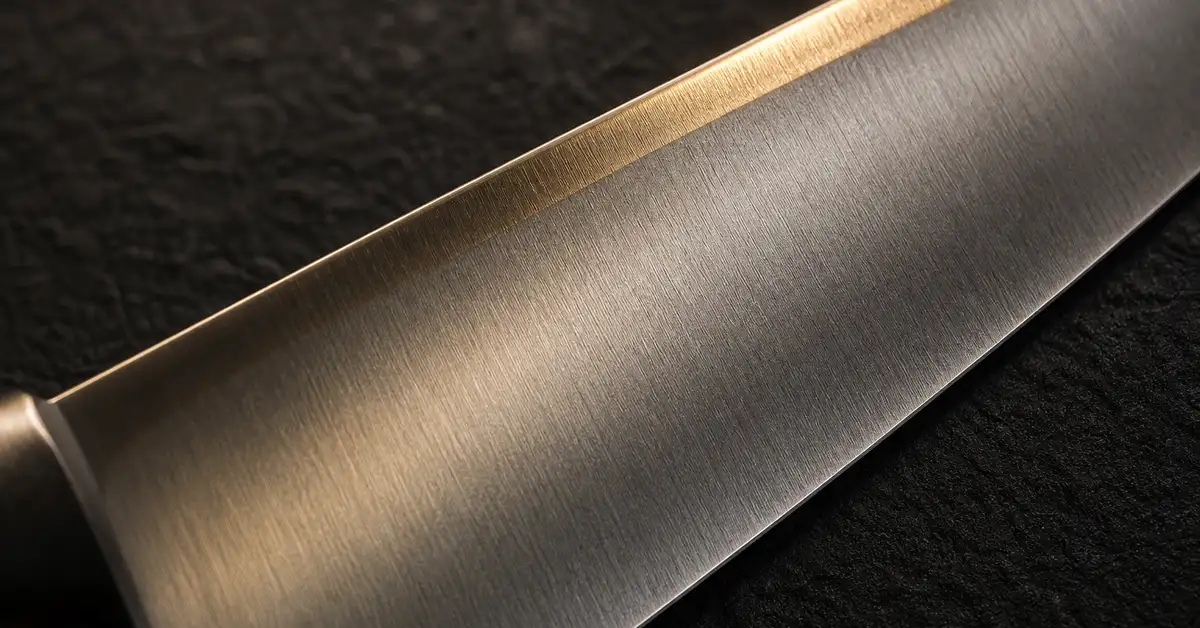
How sharp a knife feels — and how long it stays that way — comes down to the edge geometry, not just the steel. Two things matter: the bevel and the angle.
Most chef’s knives are double-beveled, meaning they’re ground on both sides to a symmetric V. That’s what makes them ambidextrous and easy to live with. A few traditional Japanese knives are single-beveled (ground on one side only) for specialist tasks; they’re superbly precise but demand skill and are usually a second or third knife, not a first.
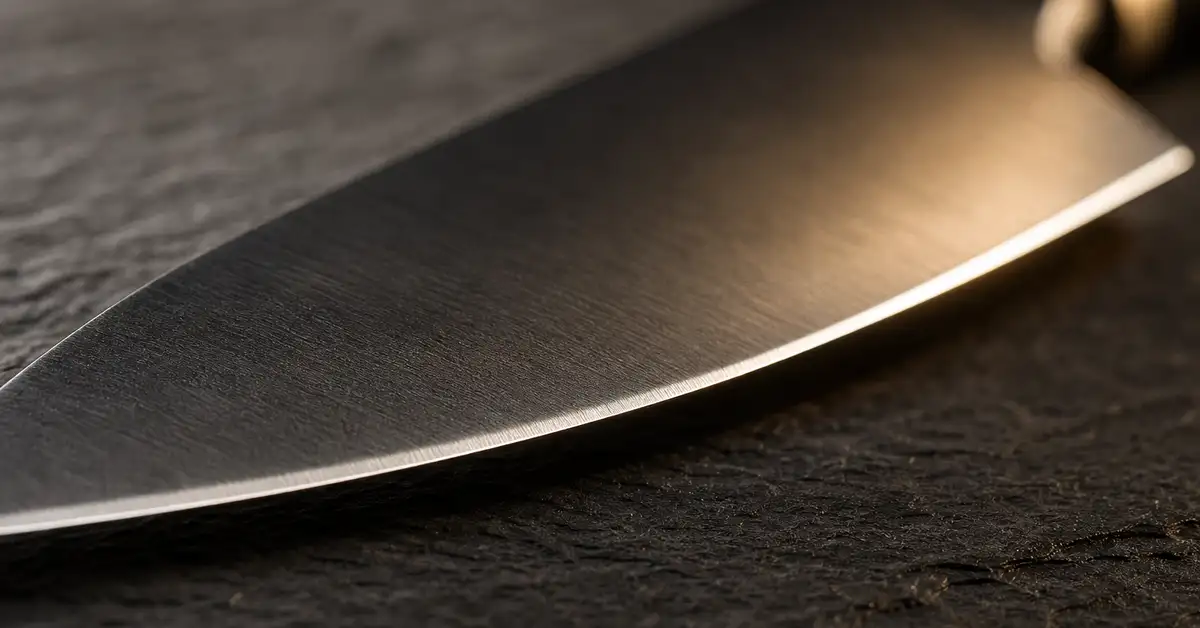
The edge angle is how acute that V is, measured per side. Modern German knives are ground thinner than they used to be: Wüsthof’s laser-honed “PEtec” edge is about 14° per side, where older German blades sat closer to 20°. Japanese-style knives go more acute still, roughly 10–15° per side. A lower angle slices more cleanly and needs less force, but the thinner edge is more fragile; a higher angle is tougher but feels less keen. This is the same trade-off as steel hardness, seen from another direction.
One point worth burning into memory: a sharp knife is a safe knife. A dull blade needs more downward force, catches and slips off food, and that’s when fingers get cut. Keeping a keen edge isn’t just about performance — it’s the single biggest safety habit in the kitchen.
Size: why 8 inches is the default
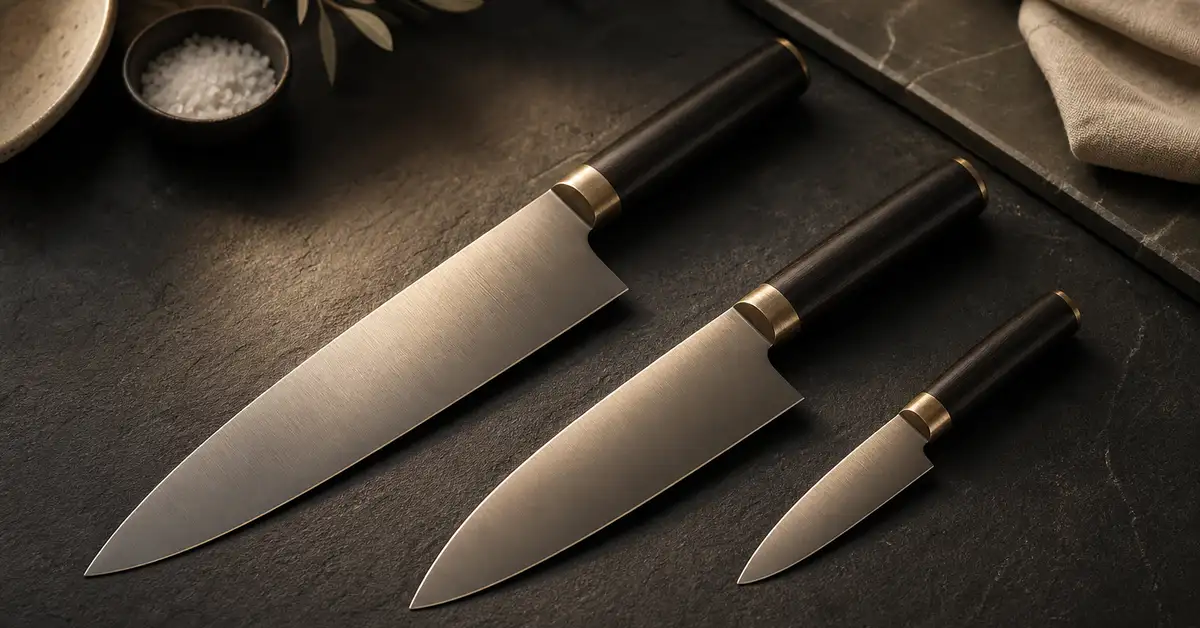
If you buy one chef’s knife, buy an 8-inch. It’s the sweet spot for most home kitchens — long enough to rock through an onion or halve a squash, short enough to stay controllable on a normal cutting board. It’s the size professionals reach for first and the size nearly every knife line is built around.
The alternatives suit specific cooks. A 6-inch blade is lighter and more maneuverable, a good fit for smaller hands, small boards, or anyone who finds a full-size knife intimidating. A 10-inch blade gives big-batch cooks more reach and a longer slicing stroke, but it takes confidence and counter space to use safely. When in doubt, eight inches is the answer you won’t outgrow — see our best 8-inch chef’s knives for picks evaluated specifically at that length.
Forged vs stamped, bolster and tang
You’ll see knives described as forged or stamped, and it’s worth knowing the difference. A forged blade is made from a single billet of steel hammered into shape; it’s usually heavier, stiffer, and has a bolster. A stamped blade is cut from a sheet of steel like a cookie from dough — lighter, cheaper, and often every bit as sharp. Don’t assume stamped means inferior: the Victorinox Fibrox, a stamped knife, is one of the best-cutting budget knives on earth and lives in professional kitchens worldwide.
The bolster — that collar of steel between blade and handle — is where forged knives differ most. A full bolster runs all the way to the edge; it feels solid and protects your fingers, but it makes sharpening the heel of the blade awkward over time. A half or sloped bolster is the modern compromise, giving you the finger guard while leaving the whole edge sharpenable. And a full tang — steel running the length of the handle — adds balance and long-term durability, which is why it’s a mark of a well-made knife.
Weight, balance and the handle
The best knife is the one that disappears in your hand. Weight and balance are personal, and they’re the main reason we always tell people to hold a knife before they fall in love with its spec sheet. Heavier German knives do some of the cutting work for you through sheer mass, which many cooks love — but they can tire smaller hands over a long prep session. Lighter Japanese knives feel quick and precise, but they ask you to supply the control.
Test balance with a pinch grip: pinch the blade just ahead of the handle between thumb and forefinger, and see where the knife wants to tip. A well-balanced knife sits neutrally at that pinch point rather than pulling forward or back. As for the handle, material matters far more for grip than for looks — textured synthetics like Fibrox and Santoprene stay secure when wet, while smooth wood or polished steel can get slippery. There’s no single “right” handle; there’s only the one that feels safe and comfortable to you.
German vs Japanese: which style suits you
Almost every choice above rolls up into one big decision: German-style or Japanese-style. Neither is better — they’re different tools for different cooks.
| German-style | Japanese-style | |
|---|---|---|
| Typical brands | Wüsthof, Zwilling, Henckels, Mercer | Shun, MAC, Tojiro, Global |
| Steel / hardness | Tough stainless (X50CrMoV15), ~56–58 HRC | Harder steels (VG-10, VG-MAX), ~58–61 HRC |
| Edge angle | ~14–15° per side (thicker, more durable) | ~10–15° per side (thinner, more acute) |
| Blade profile | Heavier, curved belly — great for rocking | Lighter, flatter — great for push/pull cuts |
| Best for | All-round durability, easy sharpening, forgiving use | Ultimate sharpness and edge retention, careful cooks |
In short: choose German if you want a forgiving, do-everything knife you can sharpen easily and don’t mind honing often. Choose Japanese if you want a thinner, sharper, longer-lasting edge and you’ll treat it with care — see our best Japanese knives for specific picks. And know that plenty of excellent “hybrid” knives — Western handles on Japanese steel — split the difference beautifully. We break down specific models for every style and budget in our best chef’s knives guide, and if you want the full breakdown of steel, edge angle and care differences, read our Japanese vs German comparison.
Caring for your chef’s knife (and staying safe)
A good chef’s knife should last decades. Whether it lasts one year or thirty comes down almost entirely to care, and the rules are simple.
- Hand-wash and dry it, always. Never the dishwasher — the heat, detergent and knocking around dull the edge and damage the handle. A quick wash and dry after use is all it takes.
- Hone often, sharpen occasionally. Honing (a few passes on a honing steel or rod) realigns a rolled edge and takes seconds — do it every few uses. That is not the same as sharpening, which actually removes metal to create a new edge and is needed only every 6–12 months for a home cook, whether on a whetstone, a quality pull-through, or via a professional service.
- Cut on the right surface. Use wood or soft plastic — see our best cutting boards for picks that are genuinely kind to an edge. Never cut on glass, stone, ceramic or the countertop — hard surfaces wreck an edge instantly and can chip harder steels.
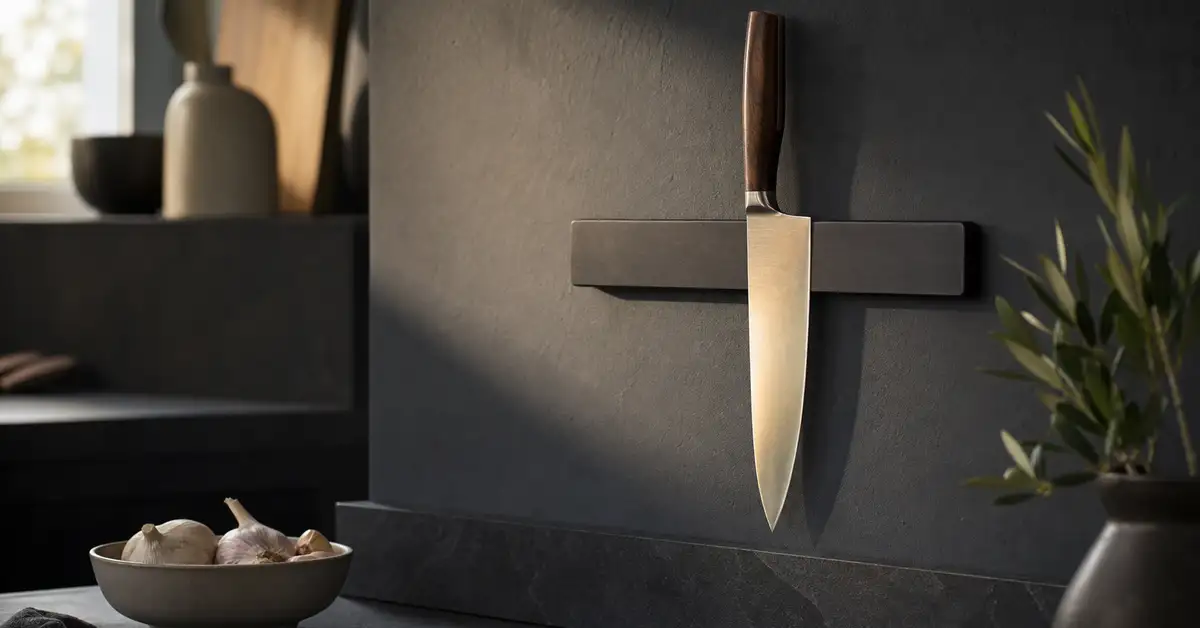
- Store it properly. Keep it in a block, on a magnetic strip, or in a blade guard — never loose in a drawer where it bangs against other tools (and where you’ll reach in and find the edge the hard way).
On safety: beyond keeping the edge keen, cut with a claw grip (fingertips curled back), let the knife do the work rather than forcing it, and never try to catch a falling knife — step back and let it drop. As a final check, it’s worth searching the US Consumer Product Safety Commission (CPSC) recall database and the manufacturer’s site for any active recall before you buy; we screen every knife we recommend against it.
How to choose — and what to buy
Pulling it all together, choosing a chef’s knife comes down to five honest questions: What size? (8 inches for most people.) German or Japanese? (Forgiving all-rounder, or sharper and more demanding.) Forged or stamped? (Heft and a bolster, or light and affordable.) How does it balance in your hand? (The pinch-grip test.) And how much maintenance will you really do? (Be honest — it decides the steel.) Answer those and the field narrows fast.
Want one safe pick right now?
If you’d rather not agonize: the Victorinox Fibrox Pro 8-inch is the best value in cutlery and hard to outgrow, and the Wüsthof Classic 8-inch is the do-everything forged knife we’d hand almost anyone. Both are honest, proven choices.
Frequently asked questions
What is a chef’s knife used for?
Almost everything. A chef’s knife is a general-purpose blade for chopping, slicing, dicing and mincing — vegetables, herbs, meat and more. Its curved edge lets you rock-chop, and its length and height handle both fine work and bigger jobs, which is why it does roughly eighty percent of a home cook’s cutting.
What size chef’s knife should I buy?
Eight inches for most people — it’s the versatile default. Choose a 6-inch if you have small hands or a small board and want something lighter, or a 10-inch if you cook in big batches and want extra reach and confidence with a longer blade.
What’s the best steel for a chef’s knife?
There’s no single best — it’s a trade-off. Tough German stainless like X50CrMoV15 (~56–58 HRC) is forgiving and easy to sharpen; harder Japanese steels like VG-10 (~60 HRC) hold a keener edge for longer but are more brittle. For most home cooks, a good stainless or stainless-clad blade is the low-maintenance sweet spot.
German or Japanese chef’s knife — which is better?
Neither is universally better. German knives are heavier, more durable and more forgiving, and they sharpen easily — great everyday knives. Japanese knives are lighter, thinner and sharper with longer edge retention, but they need a more careful hand. Choose by how you cook and how much upkeep you’ll do; hybrids blend both.
How often should I sharpen a chef’s knife?
Hone it every few uses with a honing steel — that realigns the edge and takes seconds, and it isn’t the same as sharpening. Actually sharpen it (on a whetstone, a good pull-through, or via a professional service) roughly every 6–12 months for a home cook, more often with softer steel or heavy use.
How much should I spend on a chef’s knife?
You can get a genuinely excellent knife in the $$ tier (the Victorinox Fibrox is proof). Spending up to around $150 buys better steel, balance and longevity that frequent cooks will feel. Beyond roughly $200 you’re mostly paying for exotic steel and craftsmanship — lovely, but not necessary to cook well.
The bottom line
A chef’s knife doesn’t need to be expensive or exotic to change how you cook — it needs to be the right size, made of steel that matches your habits, kept sharp, and comfortable in your hand. Understand those few things and you’ll never be at the mercy of a marketing label again. When you’re ready to choose a specific model, our honest, research-led shortlist does the narrowing for you: the best chef’s knives for every budget in 2026. Whatever you pick, keep it keen, cut on wood, and it’ll repay you at every meal.
Sources & method: Knife anatomy and construction from manufacturer and specialist references (Wüsthof, Shun/Kai, The Kitchn, F.N. Sharp); steel composition and hardness from published alloy data for X50CrMoV15 and common Japanese steels (VG-10, VG-MAX, AUS-10); edge-angle figures from Wüsthof’s PEtec specification and independent sharpening references; safety guidance from general kitchen-safety best practice and the US Consumer Product Safety Commission (CPSC) recall database. We’re a research-led site and don’t physically test knives — here’s how we choose.