Transparency first: This guide contains affiliate links. If we’re enrolled in an affiliate program, we may earn a commission at no extra cost to you — it never affects how we research or rank. Read our full affiliate disclosure policy.
A Dutch oven earns its keep at the stove long before it ever sees a loaf of bread, but the enclosed, heavy-walled shape that makes it good for braising is exactly what makes it good for baking too — the lid traps the steam a proofed dough needs for real oven spring and a crackling crust. Below are 8 Dutch ovens and dedicated bread ovens we’d genuinely recommend for home bread baking in 2026, from a bare cast-iron budget pick to purpose-built bread specialists, chosen specifically for how they handle a loaf rather than for general all-around cooking.
How we chose
We’re a research-led site, not a testing lab — we don’t bake our own comparison loaves. Editorial coverage of Dutch-oven bread baking specifically is thinner than it is for cast iron skillets generally: Serious Eats and Food & Wine are the two outlets in our research with named, dated 2025–2026 recommendations for bread, and we say so plainly against each pick rather than implying any testing of our own. Where a brand’s own product copy makes a specific, checkable claim — a stated oven-safe temperature, a lid design, a “what to cook” list that names bread — we verified it directly against that brand’s current site rather than relying on a summary. Our October 2026 search of the US Consumer Product Safety Commission (CPSC) recall database found no recall for any product recommended here (see our safety note below for the historical recalls that did turn up). Prices move constantly, so we use bands — $ (budget) to $$$$ (splurge) — and send you to the retailer for today’s number.
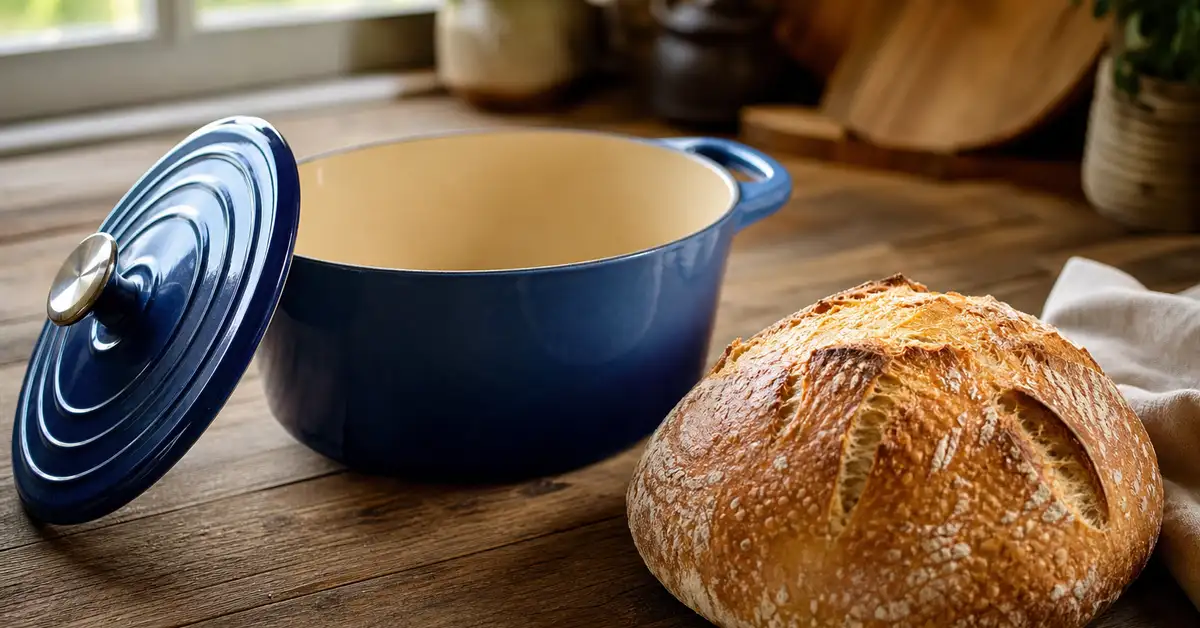
What makes a Dutch oven good for bread, specifically
Any heavy, lidded pot will hold heat, but a handful of things separate a Dutch oven that’s genuinely good for bread from one that’s just good at stews. Le Creuset’s own product description of its purpose-built Bread Oven explains that a tight-fitting domed lid is “specially designed to trap and circulate steam for maximum rise and ultimate flavor,” and that the low-profile base promotes even browning for the crust. Tramontina describes its Bestow line’s lid the same way from the other direction: “self-basting condensation ridges on lid uniformly collect and direct vapors onto food.” Both are describing the same underlying mechanism — a tight seal that keeps the dough’s own moisture working for it during the early, steam-dependent phase of the bake. Beyond the lid, capacity and shape matter: a 5–6.75-quart round pot suits a standard boule, while an oval shape (like Great Jones’ Dutchess) gives a longer, more even fit for a batard-style loaf. We couldn’t find independently tested, source-backed data comparing exact oven-spring outcomes between a flat lid, a domed “bread oven” lid and a ceramic cloche dome — where that’s true, we say so rather than asserting a performance ranking we can’t back up.
The best Dutch ovens for bread of 2026
1. Le Creuset Signature Bread Oven
What it is: A purpose-built bread vessel from Le Creuset — not a repurposed Dutch oven, but a dedicated shape designed around baking a loaf.
Best for: Bakers who bake bread often enough to justify equipment built specifically for it, and who want editorially-reviewed performance.
Specs: Enameled cast iron, 2-piece (low-profile base plus domed lid); oven-safe up to 500°F; suitable for oven, broiler, gas, electric, ceramic and induction; matte black interior enamel (no seasoning needed); made in France; limited lifetime warranty.
- Pros: Purpose-designed domed lid engineered specifically to trap steam for oven spring; low-profile base browns evenly and stamps the loaf with Le Creuset’s hallmark rings; reviewed favorably by Serious Eats for bread specifically, not just general cooking.
- Cons: Essentially single-purpose — Serious Eats notes its main drawback is that it isn’t a general Dutch oven for stews and braises; premium pricing.
Why it’s here: Serious Eats’ dedicated review of the Le Creuset Bread Oven states plainly that any loaf you’d bake in a classic Dutch oven you can bake in this bread oven, and separately describes it as an easy-to-use tool that “makes beautiful loaves” in its 2025 coverage of Le Creuset sales.
2. Lodge Double Dutch Oven
What it is: A bare (not enameled) cast-iron combo cooker whose flat lid doubles as its own dual-handle skillet — a two-tool purchase in one casting.
Best for: Sourdough bakers who prefer bare cast iron’s seasoning and durability over an enameled interior, on a budget.
Specs: 5-quart capacity; 12.62″ long x 10.37″ wide x 6.31″ tall combined, about 12.37 lb; seasoned with 100% natural vegetable oil; made in the USA; PFAS-free; compatible with any stovetop including induction, plus oven, grill or campfire.
- Pros: Genuinely dual-purpose — the lid is a usable skillet on its own; American foundry manufacturing; directly and specifically marketed by Lodge for sourdough bread; budget price for cast iron this versatile.
- Cons: Bare cast iron needs the same seasoning upkeep as a skillet; no enamel means acidic bread doughs won’t stain it, but stews and braises will need the usual cast-iron care.
Why it’s here: Food & Wine’s review, titled “Lodge Is the Best Dutch Oven for Sourdough Bread,” reports the pot withstands heat up to 650°F — “nothing” compared to the roughly 475°F bake most sourdough recipes call for — and that its pure cast-iron surface (not enamel) held up well through repeated sourdough bakes.
3. Amazon Basics Enameled Cast Iron Round Dutch Oven, 6-Quart
What it is: A straightforward enameled cast-iron Dutch oven at the most accessible price point on this list, from Amazon’s own house brand.
Best for: A first Dutch oven, or a low-commitment way to try the enclosed-baking method before investing in a premium pot.
Specs: 6-quart round capacity; enameled cast iron; dual handles; oven-safe design withstands temperatures up to 500°F per the listing; usable for baking, boiling, braising and roasting.
- Pros: Lowest price on this list for a genuine enameled cast-iron pot; 500°F oven-safe rating covers essentially every home bread recipe’s preheat temperature.
- Cons: No dedicated bread-baking editorial testing found in our research — it isn’t reviewed by Serious Eats, Food & Wine or similar outlets in our sources, so this is a manufacturer-specification recommendation, not an editorially-tested one; country of manufacture isn’t disclosed on the listing.
Why it’s here: It’s a genuinely enameled, currently-sold cast-iron pot with an explicit 500°F oven-safe rating at a price well below every other enameled option here, and Amazon’s own listing describes it as suitable for baking as well as braising and roasting.
4. Tramontina Bestow 5.5-Quart Enameled Cast Iron Round Dutch Oven
What it is: A mid-budget enameled Dutch oven whose lid is specifically engineered with condensation ridges to redirect moisture back onto the food.
Best for: Bakers who want the self-basting lid mechanic without paying premium-tier prices — with one real caveat below.
Specs: 5.5-quart round capacity; porcelain-enameled cast iron exterior; self-basting condensation-ridge lid with a cast stainless-steel knob; sturdy side handles; compatible with gas, electric and ceramic-glass cooktops; oven-safe up to 450°F; hand-wash only.
- Pros: Self-basting ridge design is a genuine, manufacturer-documented steam-management feature, not just marketing language; striking, easy-clean porcelain-enamel finish; explicitly marketed by Tramontina for “baking bread.”
- Cons: Its 450°F oven-safe ceiling is lower than several home sourdough recipes’ 475–500°F preheat and bake temperatures — check your recipe against this limit before buying; hand-wash only, unlike some enameled competitors.
Why it’s here: Tramontina’s own product page states this pot is “perfect for traditional slow simmering of hearty stews, braising roasts, baking bread, and more,” and specifically documents the self-basting condensation-ridge lid design — a concrete, checkable mechanism rather than a vague claim.
5. Cuisinart Chef’s Classic Enameled Cast Iron Dutch Oven, 5-Quart
What it is: A mid-range enameled Dutch oven from a well-known kitchen-appliance brand, sold in multiple sizes and colors across major retailers.
Best for: Home bakers who want a familiar, easy-to-find brand name and don’t need premium-tier styling.
Specs: 5-quart round capacity (also sold in other sizes); enameled cast iron; porcelain-enameled interior; induction-compatible per current listings.
- Pros: Heavy-duty cast iron with genuinely strong heat retention for even baking; competitively priced against Le Creuset and Staub.
- Cons: The “great for sourdough bread” framing we found comes from third-party retailers’ marketing copy rather than a Cuisinart-branded claim we could verify directly on cuisinart.com when we checked; no dedicated editorial bread test found in our research.
Why it’s here: It’s a genuinely current, widely-stocked enameled cast-iron Dutch oven in the sourdough-appropriate 5-quart range, and its heat-retention and even-cooking claims are consistent across every retailer listing we checked, even though we’re flagging the sourcing honestly rather than overstating a brand endorsement we couldn’t confirm firsthand.
6. Great Jones The Dutchess
What it is: A design-forward, direct-to-consumer enameled cast-iron Dutch oven in an oval shape — less common among mainstream Dutch ovens, and a better geometric match for an elongated loaf.
Best for: Bakers who prefer a batard shape over a round boule, or who want a distinctive, colorful pot that still performs.
Specs: 6.75-quart oval capacity; enameled cast iron; 15.75″ long x 9.75″ wide x 6.75″ tall, about 15 lb with lid; safe on all stovetops including induction; oven-safe up to 500°F; sold in six matte colors.
- Pros: Oval shape genuinely suits a batard better than a round pot; 500°F oven-safe ceiling covers essentially every home bread recipe; the brand’s own site names sourdough bread directly in its “what to cook” guidance, not just implied by marketing copy.
- Cons: Premium pricing for a direct-to-consumer brand without Le Creuset’s manufacturing pedigree; dishwasher-safe per the brand, but hand-drying is still recommended to prevent rust on exposed cast-iron edges.
Why it’s here: Great Jones’ own product page lists “Sourdough bread” directly among its suggested uses for the Dutchess, alongside roast chicken — a specific, first-party claim we verified on the brand’s current site rather than assuming from general marketing.
7. Le Creuset Signature Round Dutch Oven, 5.5-Quart
What it is: Le Creuset’s classic, general-purpose enameled Dutch oven — the pot the brand is best known for, used for bread as one of many jobs rather than built specifically for it.
Best for: Buyers who want one excellent pot for stews, braises and roasts that can also turn out a genuinely good loaf, rather than a bread-only vessel.
Specs: 5.5-quart round capacity; interior dimensions about 10.2″ long x 10.2″ wide x 4.4″ tall; enameled cast iron; compatible with ceramic, oven, broiler, electric, gas and induction heat sources; individually crafted in France; limited lifetime warranty; hand-wash recommended.
- Pros: Serious Eats’ 2026 Dutch-oven equipment review names this 5.5-quart Le Creuset its longtime testing favorite, citing strong searing and stewing performance; genuine everyday versatility beyond bread; French manufacturing heritage dating to 1925.
- Cons: Premium pricing on par with the dedicated Bread Oven; Serious Eats’ praise centers on general cooking performance more than bread specifically, so if bread is your only use case, the purpose-built Bread Oven above may be the better fit.
Why it’s here: Serious Eats’ 2026 roundup calls this 5.5-quart Le Creuset its “longtime favorite,” reporting it “aced searing and stewing tests” — strong evidence for a Dutch oven bought to do everything, bread included, rather than one bought for bread alone.
8. Emile Henry Modern Bread Cloche
What it is: A ceramic bread baker, not a Dutch oven — a domed refractory-ceramic cloche purpose-built to mimic a traditional bread oven’s humidity. We’re including it because it’s the clearest dedicated alternative to a cast-iron pot on this list, but it can’t do stews, braises or roasts the way every other pick here can.
Best for: Bakers who want a bread-only vessel and like that the lid doubles as a mixing/proofing bowl when inverted.
Specs: Refractory (HR) ceramic; 5.5-quart-equivalent capacity; outer dimensions about 12.7″ x 11.6″ x 5.5″; about 6.3 lb; oven-safe to 500°F; dishwasher-safe; handcrafted in France; 10-year manufacturer guarantee.
- Pros: Purpose-built dome shape and refractory ceramic are specifically engineered to hold humidity like a bread oven, per the manufacturer; the inverted lid genuinely doubles as a mixing/proofing bowl; strong 10-year warranty; made in France since 1850.
- Cons: Not a true Dutch oven — it can’t sear, braise or roast the way every cast-iron pick on this list can, so it’s an additional purchase rather than a Dutch-oven replacement; ceramic is more shock-sensitive than cast iron despite the manufacturer’s shock-resistance claims.
Why it’s here: Emile Henry’s own product description states the ceramic dome “produc[es] the same level of humidity as a traditional bread oven,” a specific, checkable manufacturer claim about the exact mechanism — steam retention — that this whole buying guide is organized around.
Dutch ovens for bread, compared
| Pot | Shape / Capacity | Material | Oven-Safe To | Price |
|---|---|---|---|---|
| Le Creuset Signature Bread Oven | Round, bread-specific | Enameled cast iron | 500°F | $$$$ |
| Lodge Double Dutch Oven | Round, 5 qt | Bare cast iron | 650°F | $ |
| Amazon Basics Enameled Dutch Oven | Round, 6 qt | Enameled cast iron | 500°F | $ |
| Tramontina Bestow | Round, 5.5 qt | Enameled cast iron | 450°F | $$ |
| Cuisinart Chef’s Classic | Round, 5 qt | Enameled cast iron | Not stated by brand | $$ |
| Great Jones The Dutchess | Oval, 6.75 qt | Enameled cast iron | 500°F | $$$ |
| Le Creuset Signature Round | Round, 5.5 qt | Enameled cast iron | 500°F (Le Creuset general spec) | $$$$ |
| Emile Henry Modern Bread Cloche | Round dome, ~5.5 qt equiv. | Refractory ceramic | 500°F | $$$ |
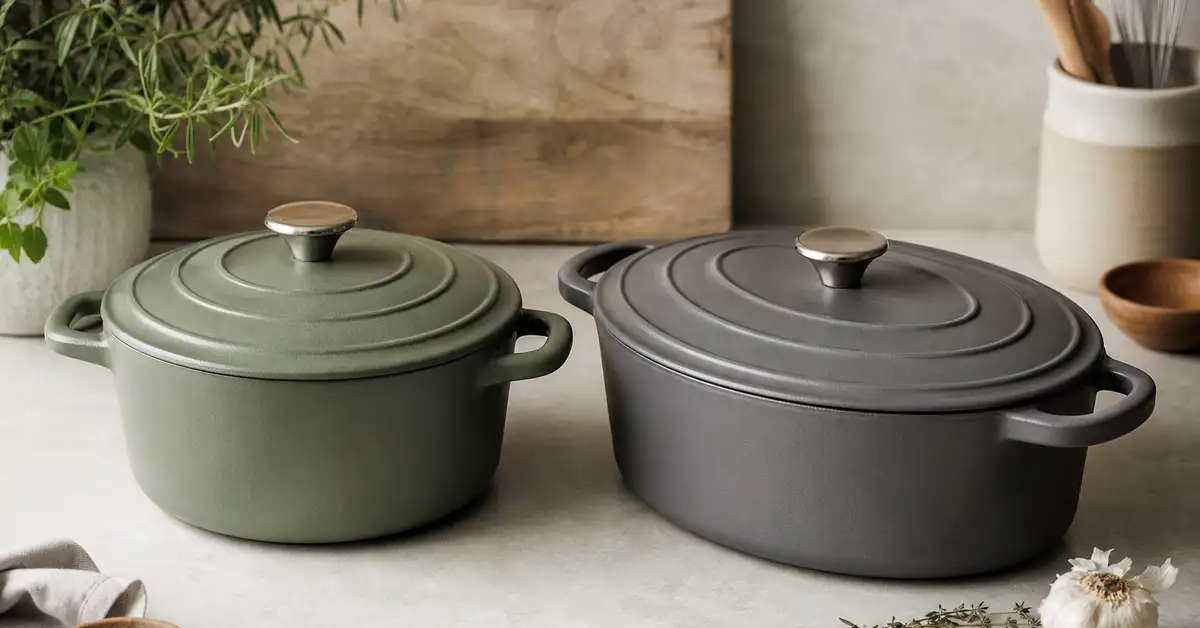
How to choose a Dutch oven for bread
- Bread-only, or an everyday pot too? If you want one vessel that also earns its keep on stews and braises, a general-purpose pick like the Le Creuset Signature Round or Cuisinart Chef’s Classic makes more sense than a single-purpose bread oven or ceramic cloche.
- Boule or batard? A round pot in the 5–6-quart range suits a standard round loaf. If you prefer an elongated batard, an oval pot like Great Jones’ Dutchess gives it more natural room.
- Check your recipe’s temperature against the pot’s rating. Most home Dutch-oven bread recipes preheat and bake somewhere between 450°F and 500°F. Tramontina’s Bestow line, for example, tops out at 450°F — comfortably fine for some recipes and too low for others, so this is worth confirming before you buy, not after.
- Bare cast iron or enamel? Bare cast iron (like the Lodge Double Dutch Oven) needs the same seasoning upkeep as a good skillet, but shrugs off high heat and doesn’t stain. Enamel needs no seasoning and cleans up easily, but has its own oven-safe ceiling to respect.
- Buying your first knife too? See our best chef’s knives guide — a good knife and a good Dutch oven are two of the tools most home cooks reach for constantly.
- Already own cast iron? See our best pre-seasoned cast iron skillets guide for the pan that pairs naturally with any of the bare cast-iron picks above.
Named exclusions
A few products came up repeatedly in our research and didn’t make the numbered list — here’s why, since a buying guide should say plainly what it left out and not just what it kept:
- ONKO and AHJ bread-branded Dutch ovens: we found both listed on Amazon, explicitly marketed for bread, when we checked (September 2026), but neither brand has an independently verifiable manufacturer site, and we couldn’t load either product’s Amazon listing directly when we checked to confirm current specs firsthand. We won’t recommend cookware we couldn’t independently verify, so both are excluded pending a cleaner verification pass, not disqualified outright.
- SULIVES enameled cast iron bread-baking pot: the only source we found for this product is an Amazon Live customer-service video, with no independently checkable specifications. That’s too thin an evidence base for a purchase recommendation.
- Our Place Perfect Pot: a genuinely popular multi-function pan that’s oven-safe to 500°F, but it’s marketed as an 8-in-1 general cooking pot, not as a Dutch oven or bread vessel specifically, and we found no bread-baking guidance from the brand itself. It didn’t fit this specific brief.
Frequently asked questions
Do I need a special Dutch oven for bread, or will any Dutch oven work?
Most enameled or bare cast-iron Dutch ovens in the 5–7-quart range will bake a decent loaf, since the mechanism — a heavy, tight-lidded pot trapping steam — doesn’t require special engineering. Purpose-built options like the Le Creuset Bread Oven or a ceramic cloche add refinements (a lower-profile base, a taller steam dome) aimed specifically at bread, but they’re a refinement on the same principle, not a different one.
What size Dutch oven is best for a standard bread recipe?
Most standard no-knead and sourdough boule recipes are written around a 5–6-quart round Dutch oven, which is why that’s the size range most of the brands on this list default to. If you regularly bake an elongated batard rather than a round boule, an oval pot in the 6.5–7-quart range gives the loaf more natural room to expand.
Does the lid design actually matter for bread, or is that just marketing?
It’s a genuine mechanism, not just marketing language: both Le Creuset and Tramontina document, in their own product materials, that their lids are specifically shaped to trap and redirect the steam a dough releases during baking. What we couldn’t find in our research is independently tested, source-backed data ranking exactly how much better one lid design performs versus another for oven spring specifically — so we can confirm the mechanism is real without claiming one brand’s version is measurably superior.
Can I use a ceramic bread cloche instead of a cast-iron Dutch oven?
Yes, for bread specifically — a dedicated ceramic cloche like the Emile Henry Modern Bread Cloche is built around the same steam-trapping principle. The trade-off is versatility: a cloche is a bread-only purchase, while every cast-iron Dutch oven on this list can also handle stews, braises and roasts.
Is bare cast iron or enameled cast iron better for baking bread?
Both work well for bread; the difference is maintenance and finish rather than baking performance. Bare cast iron, like the Lodge Double Dutch Oven, needs ongoing seasoning care but tolerates very high heat. Enameled cast iron needs no seasoning and cleans up more easily, but each enameled model has its own oven-safe temperature ceiling worth checking against your recipe.
How much should I expect to spend on a Dutch oven for bread?
As general guidance rather than a live price: budget enameled options like Amazon Basics typically sit in the $ tier, with bare cast iron like the Lodge Double Dutch Oven similarly affordable. Mid-range enameled pots from Cuisinart and Tramontina generally sit in the $$ tier. Premium options — Le Creuset’s Bread Oven and Signature Round Dutch Oven, Great Jones’ Dutchess, and the Emile Henry ceramic cloche — generally sit in the $$$–$$$$ tier. Prices move constantly, so always check the retailer for today’s number.
The verdict
If bread is the main reason you’re buying, the purpose-built Le Creuset Signature Bread Oven is the clearest, most editorially-backed choice, with the Emile Henry Modern Bread Cloche as the dedicated ceramic alternative if you don’t need a Dutch oven’s other jobs. On a budget, the Lodge Double Dutch Oven is the strongest bare cast-iron pick with real editorial backing for sourdough specifically, and the Amazon Basics 6-Quart is the cheapest genuinely enameled option. Want one pot that does everything well, bread included? The Le Creuset Signature Round or Cuisinart Chef’s Classic earn their keep well beyond baking day. Baking a longer batard rather than a round boule? Look at Great Jones’ Dutchess for its oval shape. Already sorted on cookware and shopping for the knife to go with it? See our best chef’s knives guide next.
Sources & method: Editorial bread-specific context drawn from Serious Eats’ 2025–2026 Dutch-oven and bread-oven coverage and Food & Wine’s review of the Lodge Double Dutch Oven for sourdough bread; every listed spec and manufacturer claim independently verified against each brand’s own current product page when we checked (Le Creuset, Lodge, Tramontina, Great Jones, Emile Henry), or against multiple current US retailer listings where a manufacturer’s own product page could not be independently loaded (Amazon Basics, Cuisinart). Screened against the US Consumer Product Safety Commission (CPSC) recall database via saferproducts.gov (October 2026 search; no recall found for any recommended product). We don’t physically test cookware ourselves — here’s how we choose.