Transparency first: This guide contains affiliate links. If we’re enrolled in an affiliate program, we may earn a commission at no extra cost to you — it never affects how we research or rank. Read our full affiliate disclosure policy.
Here’s the good news about chef’s knives: the value curve is steep and it flattens fast. The jump from a cheap knife to a genuinely good one is enormous — and it happens well below the price of the “prestige” blades. Spend wisely and you can own a knife the pros use for the cost of a nice dinner. Below are nine chef’s knives that give you the most cutting performance per dollar in 2026, from a budget champion the whole industry agrees on to the few knives that are worth stretching for. For the full field including the premium picks, see our best chef’s knives; to understand what you’re paying for, start with the complete chef’s knife guide.
How we chose
We’re a research-led site, not a testing lab, and we won’t pretend otherwise. We start from each maker’s own specifications — steel and hardness (HRC), edge angle, tang and bolster — then weigh them against the outlets that test knives for months: America’s Test Kitchen, Serious Eats, NYT Wirecutter, and specialists like KitchenKnifeGuru and Nothing But Knives. For a “for the money” list we weight one thing especially heavily: performance and durability relative to price, including the long game — a knife that holds its edge and lasts a decade can be better value than a cheaper one you replace or fight with. Our October 2026 search of the US CPSC recall database found no recall for any knife recommended here. Prices move, so we use price bands rather than list a number for each knife — our ladder runs under $25 · $25–75 · $75–150 · $150–300 · $300–700 · $700+ — and we send you to the retailer for today’s figure. Here’s our full method.
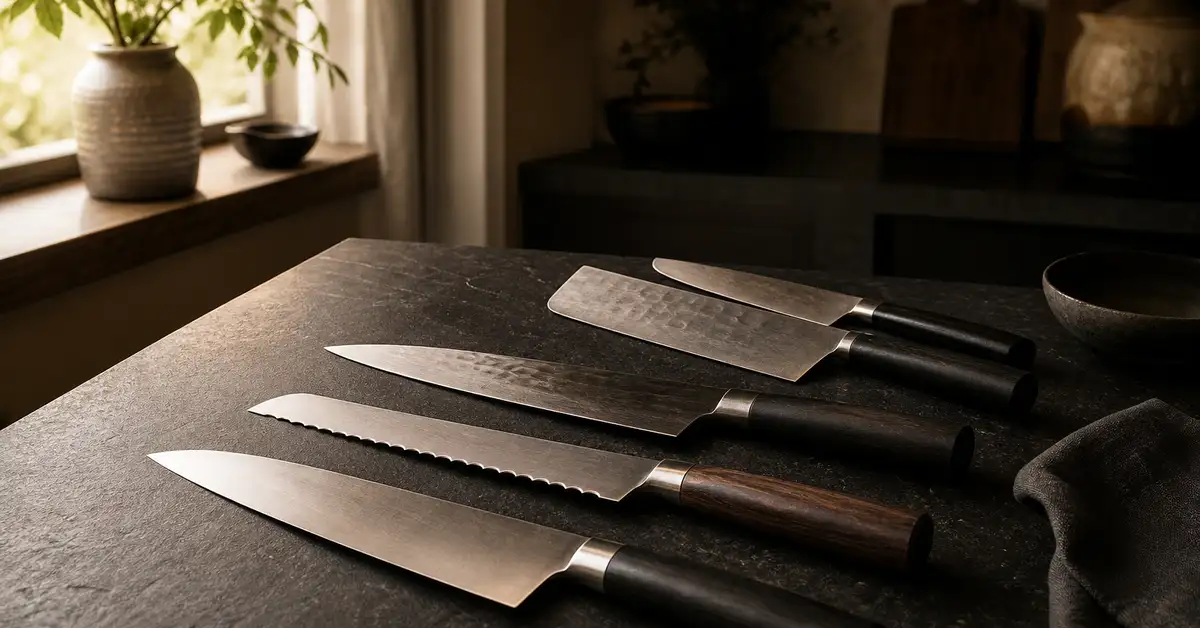
The best chef’s knives for the money in 2026
1. Victorinox Fibrox Pro 8-Inch
What it is: The near-unkillable, feather-light Swiss workhorse that fills professional kitchens — and the knife testers keep crowning the best value in cutlery.
Best for: Almost everyone. The default answer to “what’s the best cheap chef’s knife?”
Steel & edge: Stamped high-carbon stainless, ~55–56 HRC, 15° per side, no bolster, textured non-slip Fibrox handle; very light. Made in Switzerland; lifetime warranty against defects.
- Pros: Astonishing value; scary-sharp for the money; grippy, safe handle; easy to sharpen; genuinely hard to outgrow.
- Cons: Softer steel dulls faster (a quick hone fixes it); utilitarian looks; partial tang won’t satisfy traditionalists.
Why we trust it: America’s Test Kitchen has named the Fibrox its winning budget knife again, calling it “still the champ,” and it’s been NYT Wirecutter’s budget pick for over a decade.
2. Mercer Culinary Genesis 8-Inch
What it is: The forged budget knife that’s standard issue at culinary schools — a real forged blade with a bolster for stamped-knife money.
Best for: Buyers who specifically want the heft and feel of a forged knife on a budget.
Steel & edge: Forged high-carbon German stainless, ~55–57 HRC, 15° per side, full tang, partial bolster, grippy NSF-certified Santoprene handle.
- Pros: Forged feel and durability at a budget price; forgiving; secure wet grip; an ideal learner knife.
- Cons: Softer than premium German steel; less prestige; some fit-and-finish variance.
Why we trust it: A long-time culinary-school workhorse and a repeat “best budget forged” pick across editorial roundups.
3. Misen 8-Inch Chef’s Knife
What it is: A direct-to-consumer hybrid that blends German curvature with Japanese thinness — a lot more knife than a budget blade for a small step up.
Best for: Cooks ready to spend a little more for harder steel and better edge retention.
Steel & edge: AUS-10 Japanese stainless, ~58 HRC, 15° per side symmetric grind, sloped bolster for easy full-edge sharpening, POM handle. Designed in the US around Japanese steel; includes free lifetime sharpening (you cover shipping).
- Pros: Sharp and balanced; harder steel holds an edge longer than budget knives; comfortable modern handle; strong value.
- Cons: Shorter track record than legacy brands; mid-tier fit and finish.
Why we trust it: A repeat pick in modern roundups as the value hybrid sitting between budget and premium, praised for feeling far more expensive than it is.
4. Tojiro DP F-808 Gyuto (210mm)
What it is: The knife that introduced a generation to real VG-10 Japanese steel without the premium price.
Best for: Budget-minded cooks who want to try genuine Japanese performance.
Steel & edge: VG-10 core clad in stainless, ~60 HRC, roughly 15° per side; 210mm (~8.3″) blade; simple Western handle, minimal bolster. Made in Japan.
- Pros: Excellent edge retention; thin, hard-wearing blade; superb performance per dollar.
- Cons: No longer the bargain it once was; the harder edge wants good boards and technique.
Why we trust it: A long-standing NYT Wirecutter affordable-Japanese pick, praised across specialist tests for VG-10 edge retention at the price.
5. MAC Professional MTH-80 8-Inch
What it is: A Japanese-made, Western-handled hybrid many cooks consider the best-cutting chef’s knife you can buy short of going fully traditional-Japanese. The value here is longevity, not a low sticker.
Best for: Cooks who’ll keep and maintain one knife for years and want the lowest cost over its life.
Steel & edge: Sub-zero-tempered high-carbon molybdenum-vanadium stainless, ~59–61 HRC, ~15° per side, Granton-style dimples; light (~6.5 oz), full tang. Made in Japan.
- Pros: Razor-sharp out of the box; outstanding edge retention that stretches the time between sharpenings; nimble and precise.
- Cons: Costs as much as a premium German knife up front; the thinner edge rewards good technique.
Why we trust it: NYT Wirecutter’s top chef’s-knife pick since 2013 after 150+ hours of testing; reviewers note its edge retention can make it cheaper than a budget knife over a decade once you count sharpening.
6. Made In 8-Inch Chef Knife
What it is: A French-forged, direct-to-consumer knife that delivers genuine European forging without a legacy-brand markup.
Best for: Upgraders who want a forged Western knife with modern styling at a fair price.
Steel & edge: Forged X50CrMoV15 with a nitrogen (NITRO+) treatment, ~58 HRC, a keen double-bevel edge; full tang, forged bolster, polymer handle. Made in France.
- Pros: Genuinely forged European construction; comfortable, slightly forward balance; cuts beautifully; handsome.
- Cons: Leans premium for the tier; a shorter track record than legacy brands.
Why we trust it: A repeat pick in modern roundups, praised for cutting “like a dream” and for full-tang French forging at a mid-tier price.
7. Global G-2 8-Inch
What it is: The instantly recognizable seamless, all-steel Japanese knife — distinctive and durable value.
Best for: Cooks who love a light, modern, easy-to-clean one-piece design.
Steel & edge: Cromova 18 stainless, ~56–58 HRC, thin blade with a convex edge; hollow, sand-filled stainless handle for balance; very light (~172 g). Made in Japan.
- Pros: Feather-light and nimble; seamless and hygienic; tough for a Japanese knife; holds an edge well for the money.
- Cons: The steel handle can feel slippery when wet; the convex edge is fiddlier to sharpen; polarizing looks.
Why we trust it: A widely reviewed modern classic and a mainstay of value-Japanese shortlists.
8. Mercer Culinary Millennia 8-Inch
What it is: The stamped commercial-kitchen staple that costs about as little as a genuinely usable chef’s knife can.
Best for: Absolute-budget buyers, students, dorms, and stocking a backup knife.
Steel & edge: Stamped high-carbon steel, ~53–54 HRC, 15° per side, no bolster, grippy NSF Santoprene handle.
- Pros: Rock-bottom price; excellent wet grip; easy to sharpen; safe for developing skills.
- Cons: Soft steel dulls quickly; a flexy stamped blade; basic feel.
Why we trust it: A long-time commercial and training workhorse, and a genuine value floor when every dollar counts.
9. Wüsthof Classic 8-Inch
What it is: The benchmark forged German workhorse — the knife to buy if you’ve decided the do-everything blade is worth investing in once.
Best for: Cooks who cook often and want a heirloom knife they’ll keep for decades — the point where spending up genuinely pays off.
Steel & edge: Forged X50CrMoV15 stainless, ~58 HRC, ~14.5° per side; full tang, full bolster, POM handle. Made in Solingen, Germany; lifetime warranty.
- Pros: Superb balance and build; forgiving, easy-to-sharpen steel; heirloom durability and a lifetime warranty.
- Cons: Premium price; heavier than Japanese knives; the full bolster complicates heel sharpening over time.
Why we trust it: A perennial top overall pick across Wirecutter, Serious Eats and America’s Test Kitchen — the value benchmark for “when it’s worth spending more.”
Best chef’s knives for the money, compared
| Knife | Best for the money as | Steel / hardness | Price |
|---|---|---|---|
| Victorinox Fibrox Pro 8″ | Best overall value | Stamped stainless / ~55–56 HRC | $25–75 |
| Mercer Genesis 8″ | Best budget forged | Forged German / ~55–57 HRC | $25–75 |
| Misen 8″ | Best value step-up | AUS-10 / ~58 HRC | $75–150 |
| Tojiro DP F-808 | Best value Japanese | VG-10 / ~60 HRC | $75–150 |
| MAC MTH-80 8″ | Best long-term value | Molybdenum-vanadium / ~59–61 HRC | $150–300 |
| Made In 8″ | Value forged (Euro) | X50CrMoV15 NITRO+ / ~58 HRC | $75–150 |
| Global G-2 8″ | Value one-piece Japanese | Cromova 18 / ~56–58 HRC | $75–150 |
| Mercer Millennia 8″ | Cheapest worth buying | Stamped / ~53–54 HRC | under $25 |
| Wüsthof Classic 8″ | Worth spending more | X50CrMoV15 / ~58 HRC | $150–300 |
How to get the most knife for your money
Value in a chef’s knife isn’t about buying the cheapest thing — it’s about spending where the performance actually lives. A few honest rules:
- The biggest upgrade is the first one. Going from a dull, no-name knife to a Victorinox transforms your cooking; going from a Victorinox to a premium knife is a real but much smaller step. Buy the first upgrade without hesitation.
- Don’t buy the very cheapest. Knives under about a budget-tier price often use vague, soft steel and flimsy construction — a false economy that dulls fast and can be unsafe. The value floor is a Victorinox or Mercer, not a mystery-brand special.
- Count the long game. Harder steel (MAC, Tojiro) holds an edge far longer, so you sharpen less and the knife performs better for more of its life. For a cook who keeps one knife for years, that can be the better value even at a higher sticker.
- Skip the block to fund the blade. A single great chef’s knife plus a cheap paring and serrated knife beats a big bargain block every time. If you do want a set, see our best knife sets.
For the full picture of steel, edge and size, our complete chef’s knife guide explains what you’re actually paying for.
Frequently asked questions
What is the best chef’s knife for the money in 2026?
The Victorinox Fibrox Pro 8-inch. It’s light, grippy, genuinely sharp, used in professional kitchens worldwide, and costs a fraction of the prestige blades — the near-unanimous best-value pick from America’s Test Kitchen and Wirecutter. If you want a forged feel for similar money, the Mercer Genesis.
How much should I spend on a good chef’s knife?
Less than you’d think. A budget-tier knife (Victorinox, Mercer) is already excellent; a mid-tier step-up (Misen, Tojiro) buys harder steel and better edge retention. Beyond the premium tier you’re mostly paying for craftsmanship and exotic steel — lovely, but not necessary to cook well.
Is there a big difference between premium and budget chef’s knives?
Some, but less than the price gap suggests. Premium knives like the MAC MTH-80 and Wüsthof Classic use harder, more consistently heat-treated steel that holds an edge longer and tolerates less variance in fit and finish — real, measurable gains. But a budget knife done well, like the Victorinox Fibrox or Mercer Genesis, is sharp, safe and capable enough for the vast majority of home cooking. The steepest jump in performance is from a bad knife to any good one, not from a good budget knife to a premium one — spend up only once you know you’ll keep and maintain a single knife for years.
Is a cheap chef’s knife worth it?
A good cheap knife, yes — the Victorinox Fibrox is proof. A very cheap, no-name knife, usually not: soft, vague steel and flimsy builds dull quickly and can be unsafe. Buy at the value floor (a proven budget brand), not below it.
Is a more expensive knife better value long-term?
Sometimes. Harder-steel knives like the MAC MTH-80 hold an edge far longer, so you sharpen less and enjoy a sharp knife for more of its life. If you’ll keep and maintain one knife for years, a higher up-front price can work out cheaper than repeatedly replacing or fighting a dull budget blade.
Budget German or budget Japanese?
German-style (Victorinox, Mercer) is more forgiving and easier to sharpen — the safer pick for a first knife. Budget Japanese (Tojiro) gives a sharper, longer-lasting edge but wants better boards and technique. Choose by how carefully you’ll treat it.
Do I need to spend more if I cook a lot?
Not necessarily — plenty of professionals use the Victorinox daily. But if you cook often and enjoy it, stepping up to a MAC, Misen or Wüsthof buys better edge retention, balance and longevity you’ll feel every day. It’s a want, not a need.
The verdict
For the money, buy the Victorinox Fibrox Pro and spend the savings on a board and a way to keep it sharp — it embarrasses knives three times its price. Want a forged feel on a budget? The Mercer Genesis. Ready to step up a little? The Misen or Tojiro DP. And if you’ve decided to invest once in a knife you’ll keep for decades, the MAC MTH-80 or Wüsthof Classic are where spending more genuinely pays off. See the full field — premium picks included — in our best chef’s knives.
Sources & method: Specifications from manufacturer documentation (Victorinox, Mercer Culinary, Misen, Tojiro, MAC, Made In, Global, Wüsthof); performance and value rankings drawn from America’s Test Kitchen, Serious Eats, NYT Wirecutter, KitchenKnifeGuru and Nothing But Knives; screened against the US Consumer Product Safety Commission (CPSC) recall database (October 2026 search; no recall found for any recommended knife). We don’t physically test knives — here’s how we choose.