Transparency first: This guide contains affiliate links. If we’re enrolled in an affiliate program, we may earn a commission at no extra cost to you — it never affects how we research or rank. Read our full affiliate disclosure policy.
Ask five home cooks the difference between honing and sharpening a knife and you’ll usually get five different answers, or a shrug. The mix-up is understandable, and it’s also the biggest reason people think their knives dull faster than they should. Honing and sharpening are genuinely different jobs, done with different tools, and knowing which one you need in the moment is worth more than owning an expensive knife in the first place. Already know you need to sharpen? Jump straight to our best knife sharpeners; if you’d rather start with the basics of steel and edges, see the complete chef’s knife guide. (Updated for 2026.)
The short answer
Honing realigns an edge that’s bent very slightly out of true. It removes essentially no metal, and you can do it often. Sharpening grinds away steel to create a new edge. It always removes some metal, however small the amount, so you do it far less often — only once honing stops bringing the edge back to life.
What honing actually does
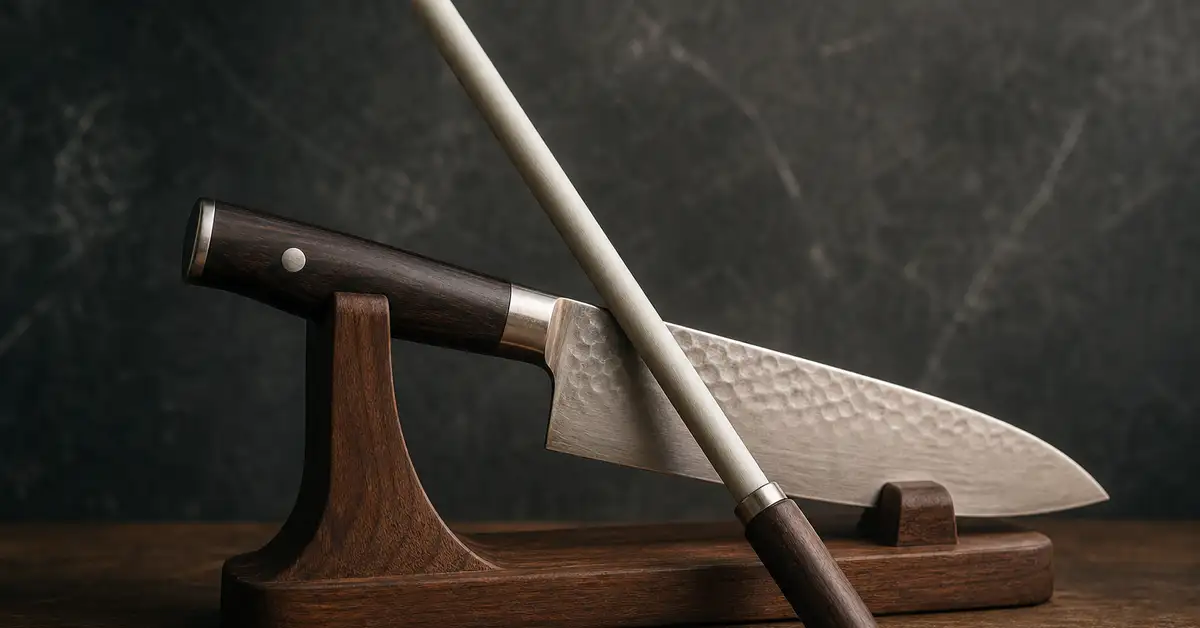
Every knife edge is a microscopically thin strip of steel, and normal cutting — even on a good board — gradually bends that strip a few degrees out of true, rather than wearing it away. It’s the difference between a fence post that’s leaning and one that’s actually snapped. A honing rod, made of smooth steel or fine ceramic, straightens that lean back upright with a few light passes down each side of the blade at the knife’s own edge angle. Nothing is ground off; the steel is simply nudged back into line, the same way you’d tap a bent picture frame straight rather than cutting a new one.
Because honing removes so little metal, it’s safe to do often — many cooks hone before most cooking sessions, or every few uses for a knife in daily rotation. It works at the angle the knife was originally sharpened to, so shallower for a Japanese-style edge and a touch wider for a Western one. What honing can’t do is restore an edge that’s actually worn down: past a certain point, no amount of steel or ceramic realignment brings the bite back, and that’s the signal to sharpen instead.
A honing rod belongs in every kitchen
Whatever sharpener you own or plan to buy, pair it with a quality ceramic honing rod — it’s the cheapest habit that keeps any edge working longer between real sharpenings.
What sharpening actually does
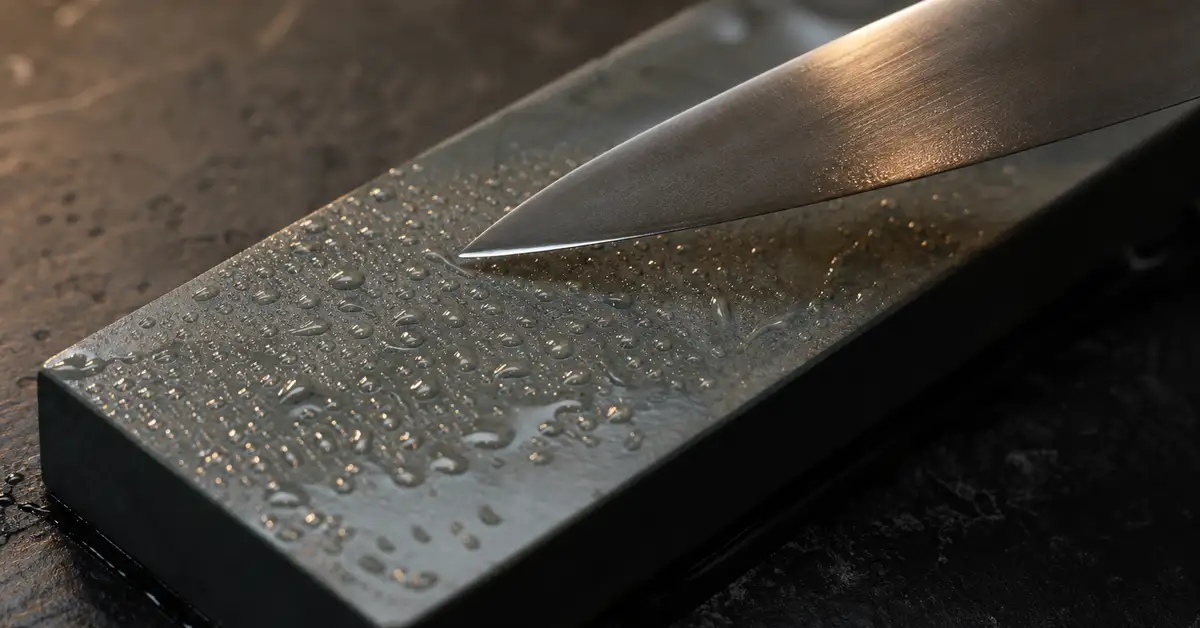
Sharpening uses an abrasive — a whetstone, a diamond plate, or the wheels or belts in an electric machine — to physically grind the edge back to a clean, thin apex. Sharpening specialists sometimes describe a worn edge as having rounded from a crisp “V” shape into a blunt “U,” and the only way to turn a U back into a V is to remove some steel; realignment alone can’t do it. A proper sharpening session follows a coarse-to-fine sequence: a coarser grit reshapes the bevel and raises a tiny burr along the whole edge (the tactile sign that you’ve reached the apex), a medium grit refines that bevel, and a fine grit or leather strop cleans up the burr and polishes the apex.
Because sharpening removes real material, it should happen far less often than honing — most home cooks do it only a couple of times a year, more if you cook daily or use a harder cutting surface than wood. Over-sharpening isn’t dangerous, but it does shorten a knife’s working life for no benefit, which is exactly why honing exists: to stretch the time between sharpenings, not replace them. See our full guide to sharpeners — electric, guided, manual and stone — and our step-by-step sharpening walkthrough for exactly how to do it.
How to tell which one you need right now
You don’t need a lab test to know which job is due — your knife will tell you if you pay attention to how it behaves on a few everyday ingredients:
- It glances off a ripe tomato’s skin instead of biting in: try honing first. This is the classic sign of a rolled, misaligned edge rather than a genuinely worn one.
- It crushes fresh herbs instead of slicing them cleanly: another honing signal — a true edge shears leaves without bruising them.
- You need real downward pressure to start any cut: a healthy edge needs almost none. Try honing; if that doesn’t fix it, it’s time to sharpen.
- Honing doesn’t restore the bite, or it only helps for a cut or two: the edge itself has worn down. This is the point to actually sharpen.
- You can see or feel a visibly dull, rounded edge under good light: skip honing and go straight to sharpening.
How often to do each
Hone often and lightly: before most cooking sessions, or every few uses for a knife in daily rotation, is a sensible default and takes only seconds. Sharpen rarely and deliberately: roughly twice a year covers typical home cooking, while heavy daily use, tougher cutting boards, or cutting through bone and dense root vegetables can mean sharpening more often. If you’re honing correctly and the edge still won’t bite, don’t keep honing out of habit — that’s the cue to sharpen instead.
Angle matters for both
Whichever job you’re doing, match the tool to your knife’s own edge angle. Western-style chef’s knives are typically ground wider per side, built for durability through chopping and the occasional tough spot. Japanese-style knives — gyuto, santoku, nakiri — usually run more acute per side, favoring fine slicing over sheer toughness. Honing at the wrong angle won’t do much damage since so little metal moves, but sharpening at the wrong angle can genuinely reshape a bevel you didn’t intend to change, so it’s worth checking your knife’s factory spec, or choosing a sharpener with guides that match it. See our chef’s knife guide for more on steel, edge geometry and choosing a knife in the first place.
Frequently asked questions
Is honing the same as sharpening?
No. Honing realigns an edge that’s bent slightly out of true and removes essentially no metal. Sharpening grinds away steel to form a genuinely new edge. They solve different problems, and most knives need far more honing than sharpening.
How often should I hone my knife?
Before most cooking sessions, or at least every few uses if you cook daily. It takes seconds, barely touches the steel, and is the single best habit for keeping an edge working well between real sharpenings.
How often should I sharpen my knife?
Roughly twice a year for typical home cooking is a reasonable default. Cook daily, use a harder cutting surface, or cut through bone and dense vegetables often, and you may need to sharpen more frequently. See our best knife sharpeners for the tools to do it.
Can honing make a dull knife sharp again?
Only if the dullness is actually misalignment rather than true wear — which is common, since most “dull” knives are really just rolled. If a few honing strokes don’t restore the bite, the edge has genuinely worn down and needs sharpening instead.
What angle should I hone or sharpen at?
Match your knife’s own factory angle — generally wider per side for Western-style knives and more acute for Japanese-style knives. Honing at a slightly off angle does little harm since so little metal moves; sharpening at the wrong angle can reshape the bevel, so it’s worth getting right.
Do I need both a honing rod and a sharpener?
Yes, ideally. A honing rod is inexpensive and handles the frequent, day-to-day maintenance; a sharpener (electric, guided, manual or stone) handles the occasional real edge work honing can’t do. Together they cover the full picture of edge care.
The bottom line
Honing and sharpening aren’t two words for the same habit — they’re two different jobs, and mixing them up is why so many “dull” knives were never actually dull at all. Hone often and lightly to keep a good edge working; sharpen rarely and deliberately to create a new one once honing stops helping. Get a decent honing rod, pick the right sharpener for how you cook, and a good knife will reward you for years. For the sharpeners themselves, see our full, honestly-ranked guide.
Sources & method: Synthesized from sharpening-specific technical writing at Serious Eats, EdgePro and The Spruce Eats, specialist honing guidance from KitchenKnifeGuru, and the broader editorial consensus reflected in America’s Test Kitchen, Good Housekeeping, Outdoor Life and MeatEater’s sharpener coverage. We don’t physically test knives or sharpeners ourselves — here’s how we choose.