How you store your knives matters almost as much as how you sharpen them: loose in a drawer, blades bang against each other and against every other tool in there, rolling and chipping edges within weeks. Store them properly and a good knife stays sharp longer, and — just as important — stays safer to reach for. This walkthrough covers the main storage options and how to use each one safely, whatever setup fits your kitchen. Still building your set? See our best knife sets for options with dedicated storage included. (Updated for 2026.)
What you’ll need
One storage method suited to your kitchen — a wood or universal knife block, a wall-mounted magnetic strip, an in-drawer knife tray, or individual blade guards/sheaths — plus a clean, dry knife to store (never put a wet blade away). Which one you pick depends mostly on counter space, wall access, and how many knives you own; the steps below work for any of them.
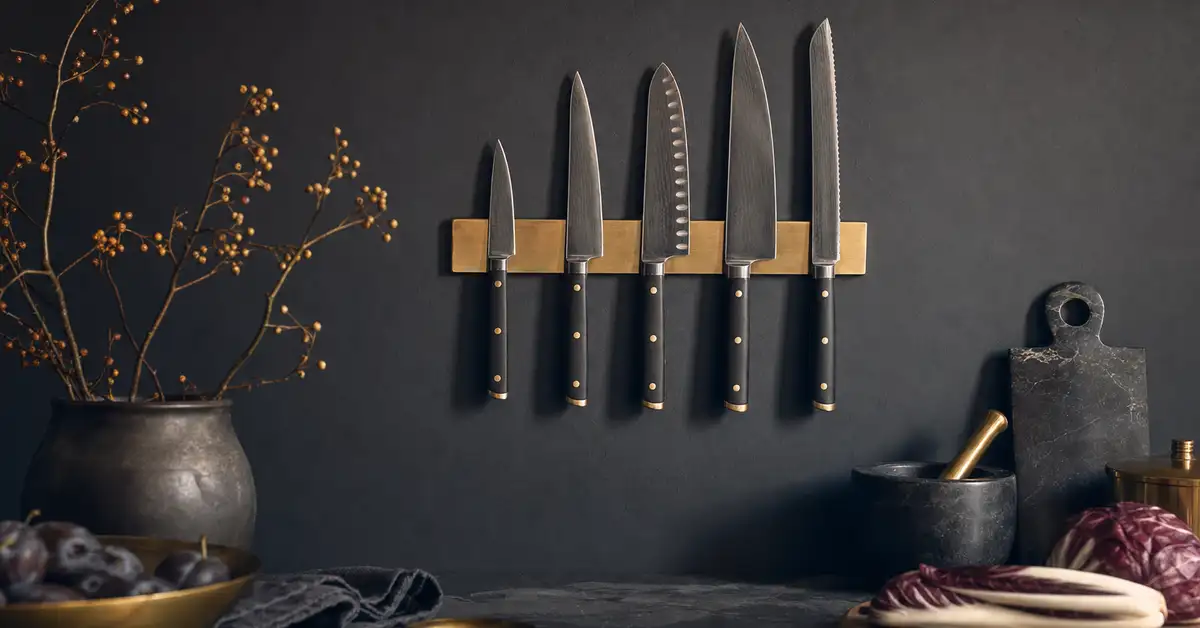
How to store kitchen knives, step by step
1. Choose the storage method that fits your kitchen
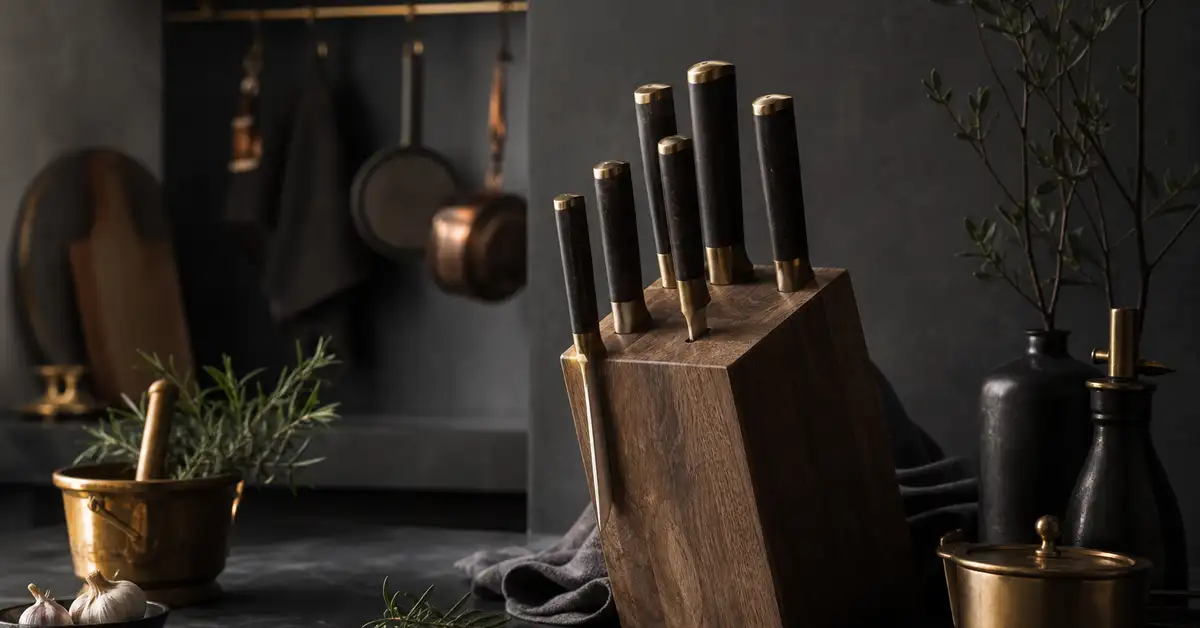
A slotted wood block protects edges well and looks tidy, but it’s fixed to one knife shape and size per slot. A universal block (with rods or bristles instead of slots) or a magnetic wall strip accepts any knife regardless of size, and is easier to keep clean since there’s no enclosed slot to trap moisture. An in-drawer knife tray works well if counter space is tight. Individual blade guards or sheaths are the right call for knives you travel with or store loose in a drawer as a temporary measure. See our best knife sets if you’re choosing a set with storage already built in.
2. Always wash and dry the blade before storing it
Never put a knife away wet or dirty. Hand-wash and dry it fully first — moisture trapped against steel in a block slot or sheath is one of the fastest ways to cause spotting, staining or, on high-carbon blades, actual rust. This matters even more for wood knife blocks, where a damp blade sitting in an enclosed slot has nowhere to dry out.
3. Insert or place the blade slowly, edge away from your hand
When sliding a knife into a block slot or an in-drawer tray, keep your fingers clear of the slot opening and guide the spine, not the edge, with light pressure. On a magnetic strip, lay the spine against the magnet first and let the blade settle rather than swinging it into place, which reduces the risk of the edge glancing off the strip or another knife. Slow, deliberate placement is the single biggest safety habit in this whole routine.
4. Space knives apart on a magnetic strip
Leave a gap between each knife on a magnetic strip so blades and edges don’t touch each other. Edge-to-edge contact on a strip can roll or micro-chip a fine edge over time, and it makes removing one knife without brushing against its neighbor’s edge harder than it needs to be.
5. Position blocks and strips out of reach of children, and away from splashes
Keep a countertop block toward the back of the counter, and mount a magnetic strip high enough that it isn’t a temptation for curious kids to reach. Avoid mounting a strip directly above a sink or stovetop, where splashes and steam can promote spotting or rust over time, and where a knife could be knocked loose into a hot pan or a wet sink.
6. Use a blade guard or sheath for any knife kept loose or in transit
If a knife has to go in a drawer, a bag, or travel with you, always fit it with a blade guard or sheath first. A knife loose in a drawer is a genuine hazard to anyone reaching in without looking, and unprotected blades banging against other utensils dulls and chips edges fast. A guard solves both problems at once.
7. Check and clean your storage periodically
Every few months, pull everything out of a wood block and check the slots for trapped moisture, food debris or mold, especially in humid kitchens — a quick wipe with a dry cloth or a pipe cleaner keeps slots clean. Wipe down a magnetic strip and check that the magnets are still holding knives securely; a strip that’s lost its grip is a genuine hazard, not just an inconvenience.
Storage options compared
- Wood knife block (slotted): Protects edges well and looks traditional, but fixed slot sizes limit which knives fit, and slots can trap moisture if a blade goes in damp.
- Universal block (rods or bristles): Accepts any knife shape or size and dries out more easily than a slotted block, at the cost of a slightly less tidy look.
- Magnetic wall strip: Saves counter space entirely and displays knives for easy access, but needs secure wall mounting and a location away from splashes and small children’s reach.
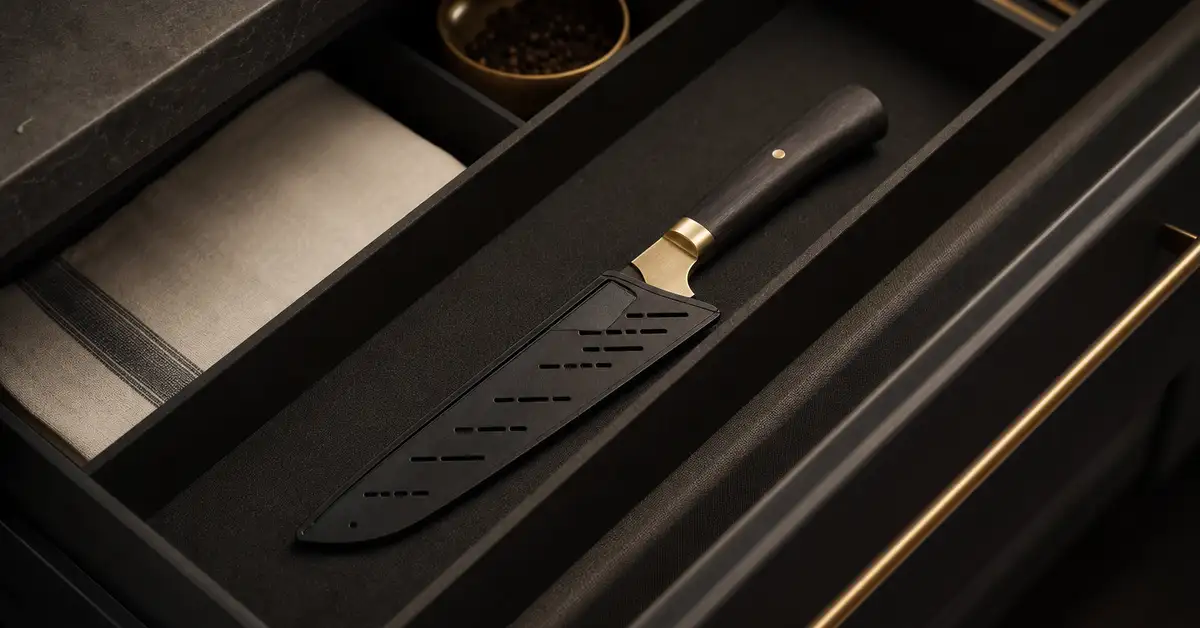
- In-drawer knife tray: Keeps knives out of sight and off the counter, a good option in a small kitchen, though it demands care when reaching in since blades sit closer to your hand.
- Individual blade guards or sheaths: The right choice for loose drawer storage, travel, or knives without a dedicated home yet — inexpensive and genuinely protective.
Still building your knife collection?
Blocks, magnetic stands, or knife-only sets you store your own way — we’ve honestly compared the sets worth buying in 2026.
Frequently asked questions
Is it safe to store knives loose in a drawer?
Not without protection. A knife loose in a drawer is a hazard to anyone reaching in without looking, and unprotected blades banging against other utensils dulls and chips edges quickly. If a drawer is your only option, always fit each knife with a blade guard or sheath first.
Are magnetic knife strips safe?
Yes, when mounted securely and positioned thoughtfully — high enough to be out of reach of children, away from a sink or stovetop where splashes or steam could promote rust, and with knives spaced apart so edges don’t touch. Check periodically that the strip’s grip hasn’t weakened.
Should I dry a knife before putting it in a block?
Yes, always. A damp blade stored in an enclosed slot has nowhere to dry out, which can cause spotting, staining, or actual rust on high-carbon steel. Hand-wash and fully dry every knife before it goes back into storage of any kind.
What’s the difference between a slotted block and a universal block?
A slotted block has fixed-size openings shaped for specific knives, which protects edges well but limits which blades fit. A universal block uses rods or bristles instead of slots, so it accepts any knife regardless of size and tends to dry out more easily, at a slight cost to how tidy it looks.
How often should I clean my knife block or strip?
Every few months is a reasonable routine. Empty a wood block and check the slots for trapped moisture, food debris or mold, especially in a humid kitchen, and wipe down a magnetic strip while checking that the magnets still hold knives securely.
The bottom line
However you store your knives — a slotted block, a universal holder, a magnetic strip, an in-drawer tray, or blade guards for loose storage — the goal is the same: keep edges dry, keep them from touching each other, and keep blades out of reach of anyone who might grab one without looking. Get that right and your knives stay sharper longer and safer to use every single day. If you’re still choosing a set, see our best knife sets for options with storage already built in.
Sources & method: Storage guidance synthesized from current knife-care and kitchen-safety writing at America’s Test Kitchen, Good Housekeeping and The Spruce Eats, alongside manufacturer storage recommendations covered in our knife-set research. We don’t physically test knives ourselves — here’s how we choose.