Transparency first: This guide contains affiliate links. If we’re enrolled in an affiliate program, we may earn a commission at no extra cost to you — it never affects how we research or rank. Read our full affiliate disclosure policy.
Knife shopping gets a lot easier once you understand the brands themselves — where they’re actually made, what steel philosophy they build around, and who they’re really for. Below are 12 kitchen knife and cutlery brands worth knowing in 2026, from Swiss workhorses to Seki, Japan Damascus specialists, each with an honest read on manufacturing, construction and price tier. Ready to compare specific models instead? See our best chef’s knives, our best Japanese knives, or our Japanese vs German comparison. (Updated for 2026.)
How we chose
We’re a research-led site, not a testing lab — we don’t run our own edge-retention rigs. We built this list from manufacturer specifications (country of manufacture, steel type, typical HRC hardness) cross-checked against current editorial testing at America’s Test Kitchen, Good Housekeeping, Wirecutter, Serious Eats and Food Network, plus specialist knife coverage. We deliberately separate brand origin from country of manufacture — a lot of marketing blurs the two — and we don’t treat “Japanese steel,” “Damascus” or a high HRC number as automatic proof of better performance. Every brand is screened against the US CPSC recall database. Prices move, so we use price bands rather than list a number for each brand — our ladder runs under $25 · $25–75 · $75–150 · $150–300 · $300–700 · $700+ — and we send you to the retailer for today’s figure. Here’s our full method.
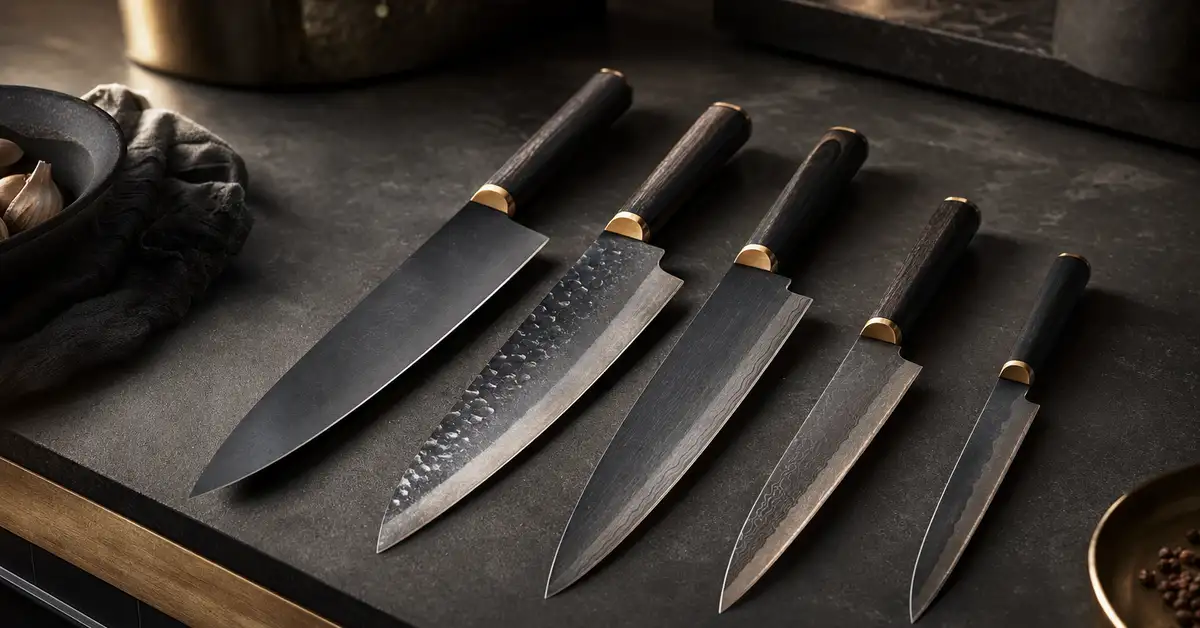
The best kitchen knife brands of 2026
1. Victorinox
What it is: The Swiss maker behind the Fibrox Pro line — stamped, easy-to-sharpen knives that fill professional kitchens worldwide and remain a top budget recommendation across independent testing.
Best for: Students, first-time buyers, and anyone who wants professional-grade cutting without premium pricing.
Profile: Manufactured in Switzerland; stamped construction; ~55–56 HRC; slip-resistant Fibrox handles; a budget-tier chef’s knife price.
- Pros: Exceptional value; light and easy to sharpen; genuine Swiss manufacture; lifetime warranty against defects.
- Cons: Softer steel dulls faster than premium brands; utilitarian looks over luxury feel.
Why we trust it: America’s Test Kitchen has repeatedly named the Victorinox Fibrox Pro its top budget pick, and Good Housekeeping gave a Victorinox chef’s knife a 2024 Kitchen Gear Award.
2. Mercer Culinary
What it is: The brand standard-issue in US culinary schools — genuinely forged Genesis knives alongside stamped Millennia knives, both built for foodservice durability at a low price.
Best for: Cooks who want NSF-oriented, professional-leaning knives without professional-grade cost.
Profile: Primarily manufactured in Taiwan; stamped Millennia ~53–54 HRC, forged Genesis ~56 HRC; grippy Santoprene handles; a budget-tier price.
- Pros: Very low price; broad culinary-school and foodservice pedigree; genuine forged option (Genesis) at budget pricing.
- Cons: Millennia’s stamped steel is comparatively soft; less premium finish than German heritage brands.
Why we trust it: America’s Test Kitchen named the Mercer Culinary Millennia 8-inch its Best Buy in 2026 testing.
3. Wüsthof
What it is: A Solingen, Germany cutlery house dating to 1814 — the benchmark forged German brand and the default “one good knife” recommendation for a generation of home cooks.
Best for: Serious home cooks who want a buy-once, keep-for-decades knife with forgiving, easy-to-sharpen steel.
Profile: Forged in Solingen, Germany; X50CrMoV15 stainless, ~58 HRC; PEtec edge; full tang; a premium price.
- Pros: Genuine Solingen heritage; robust, well-balanced construction; forgiving steel that’s easy to maintain.
- Cons: Heavier than Japanese-style knives; premium pricing versus Victorinox or Mercer.
Why we trust it: Wirecutter has repeatedly included Wüsthof among its tested chef’s-knife picks, and specialist reviewers consistently cite its established track record and lifetime warranty.
4. Zwilling
What it is: A Solingen brand tracing its history to 1731, one of the oldest continuously recognized German cutlery names, known for its ice-hardened FRIODUR steel treatment and curved-bolster Pro line.
Best for: Cooks who want German forged construction with a slightly different balance and bolster feel than Wüsthof.
Profile: Forged in Germany (varies by line); X50CrMoV15-family stainless, ~57 HRC; FRIODUR ice-hardening; a premium price.
- Pros: Strong Solingen heritage; forged full-tang construction; ice-hardening improves edge retention and corrosion resistance.
- Cons: The Zwilling/Henckels naming structure can confuse buyers; prices and origin vary by line.
Why we trust it: Specialist reviewers include Zwilling among established brands with proven track records and lifetime warranties.
5. Made In
What it is: A direct-to-consumer cookware brand whose chef’s knife is genuinely forged in Thiers, France, using a nitrogen-treated steel that bridges German durability and Japanese-style thinness.
Best for: Design-conscious cooks who want a premium-feeling forged knife without moving into boutique Japanese pricing.
Profile: Forged in Thiers, France; X50CrMoV15 with nitrogen (NITRO+) treatment, ~58 HRC; full tang; a mid-tier price.
- Pros: Genuine French forging; comparatively thin, agile geometry; strong bridge between German and Japanese philosophies.
- Cons: Broader blade/handle proportions won’t suit every hand; a newer name than the legacy German or Japanese brands.
Why we trust it: Food Network named the Made In 8-inch chef’s knife a Best Overall pick in its tested round-up.
6. Misen
What it is: A direct-to-consumer brand built around a single, heavily marketed chef’s knife — Japanese-style steel in a hybrid Western/Japanese profile at a price well under premium Japanese brands.
Best for: Value-conscious cooks who want a more acute-feeling blade without paying Shun or Miyabi prices.
Profile: Manufactured in China using AUS-10/ACUTO440 steel; ~58±2 HRC; full tang; a mid-tier price.
- Pros: Strong specification-to-price ratio; thin, versatile hybrid geometry; approachable for cooks new to harder steel.
- Cons: Chinese manufacture may surprise buyers expecting Japanese production; direct-to-consumer pricing fluctuates.
Why we trust it: Serious Eats and Food Network have both included Misen among their tested chef’s-knife picks.
7. Tojiro
What it is: A Japanese manufacturer whose DP series has become the specialist recommendation for an affordable first genuinely Japanese-made chef’s knife.
Best for: Cooks moving from Western knives who want real Japanese steel and manufacture without premium-brand pricing.
Profile: Manufactured in Japan; laminated 3-layer construction with a VG-10 core, ~60–61 HRC; a mid-tier price.
- Pros: Unusually strong steel-to-price ratio; genuine Japanese manufacture; thin, acute cutting geometry.
- Cons: Simpler handle and finish than Shun or Miyabi; less consistent mainstream retailer stock.
Why we trust it: Wirecutter included the Tojiro F-808 among knives tested for its chef’s-knife guide, and specialist Japanese-knife coverage consistently positions the DP as a value benchmark.
8. Shun
What it is: A Seki, Japan maker that brought Damascus-clad Japanese knives into the mainstream US market, backed by strong US retail and warranty support.
Best for: Cooks and gift-buyers who want genuine Japanese sharpness and striking looks with accessible US service.
Profile: Manufactured in Seki, Japan; VG-MAX core with Damascus cladding, ~60–61 HRC; ~16° edge per side; a splurge price.
- Pros: Excellent out-of-box sharpness; genuine Japanese manufacture; strong US service infrastructure; wide giftable range.
- Cons: Harder edge needs more careful use; D-shaped handle isn’t universal.
Why we trust it: Food Network named the Shun Classic Western 8-inch its Best Japanese-Made Chef’s Knife.
9. Miyabi
What it is: Zwilling’s Japanese premium brand, manufactured in Seki with several steel philosophies spanning VG10 to powdered SG2/R2 super steels at the top of the range.
Best for: Serious home cooks and collectors who want Seki manufacture backed by German-brand distribution and warranty support.
Profile: Manufactured in Seki, Japan; VG10 to SG2/R2 depending on line; ~60–63+ HRC; a splurge price.
- Pros: Refined Japanese finishing; exceptional edge retention on the harder lines; extensive premium choice.
- Cons: High price; harder SG2/MC steels carry more chipping risk; confusing line differentiation for newcomers.
Why we trust it: Food Network selected the Miyabi Birchwood as its Best for Precision Cuts, and specialist coverage identifies Miyabi’s SG2 lines as harder and more edge-retentive than Shun’s mainstream steel.
10. Global
What it is: A Japanese brand known for distinctive one-piece stainless construction and hollow, sand-filled handles — a genuinely different look and feel from any wood-handled knife on this list.
Best for: Cooks who prefer light, nimble, easy-to-clean knives with a modern aesthetic.
Profile: Manufactured in Japan; proprietary Cromova 18 stainless, ~56–58 HRC; one-piece hollow-handle construction; a premium price.
- Pros: Distinctive lightweight all-metal design; easy-clean, hygienic one-piece build; good corrosion resistance.
- Cons: Hollow metal handle divides opinion; softer steel than Shun, Miyabi or Tojiro.
Why we trust it: Specialist reviewers include Global among established brands with a proven track record, prized for minimalist design and easy maintenance.
11. Artisan Revere
What it is: A US-made boutique brand built around Elmax powder steel — a Swedish/Austrian-origin super steel rather than the traditional German or Japanese alloys used elsewhere on this list.
Best for: Enthusiasts and gift-givers who want a small-batch, US-manufactured knife with class-leading edge retention.
Profile: Made in the United States; Elmax powder steel, ~60–62 HRC; full tang; a splurge, boutique price.
- Pros: Genuine US manufacture; unusually thin geometry; premium powder steel; strong boutique differentiation.
- Cons: High price; limited mainstream retail distribution; less long-term editorial testing than legacy brands.
Why we trust it: Nothing But Knives named Artisan Revere its American-made pick in a high-end knife guide, verifying its Elmax, full-tang, 60–61 HRC construction.
12. Dalstrong
What it is: A brand founded in Canada with an extensive range spanning conventional German-style steel (Gladiator) to Japanese AUS-10V-core Damascus (Shogun), manufactured primarily in China.
Best for: Shoppers who want striking Damascus visuals and broad product choice, and understand Shogun is made in China despite its Japanese steel core.
Profile: Major production in Yangjiang, China; Gladiator uses German-style steel, Shogun uses AUS-10V core with 66-layer Damascus, 62+ HRC; a mid-tier price.
- Pros: Extensive range; competitive specifications for the price; dramatic Damascus finishes; useful included sheaths.
- Cons: Chinese manufacture is sometimes mistaken for Japanese; marketing outpaces specialist reputation; hard edges need careful handling.
Why we trust it: Nothing But Knives reviewed the Dalstrong Shogun Series X, confirming its 67-layer Damascus/AUS-10V construction and 62+ HRC rating.
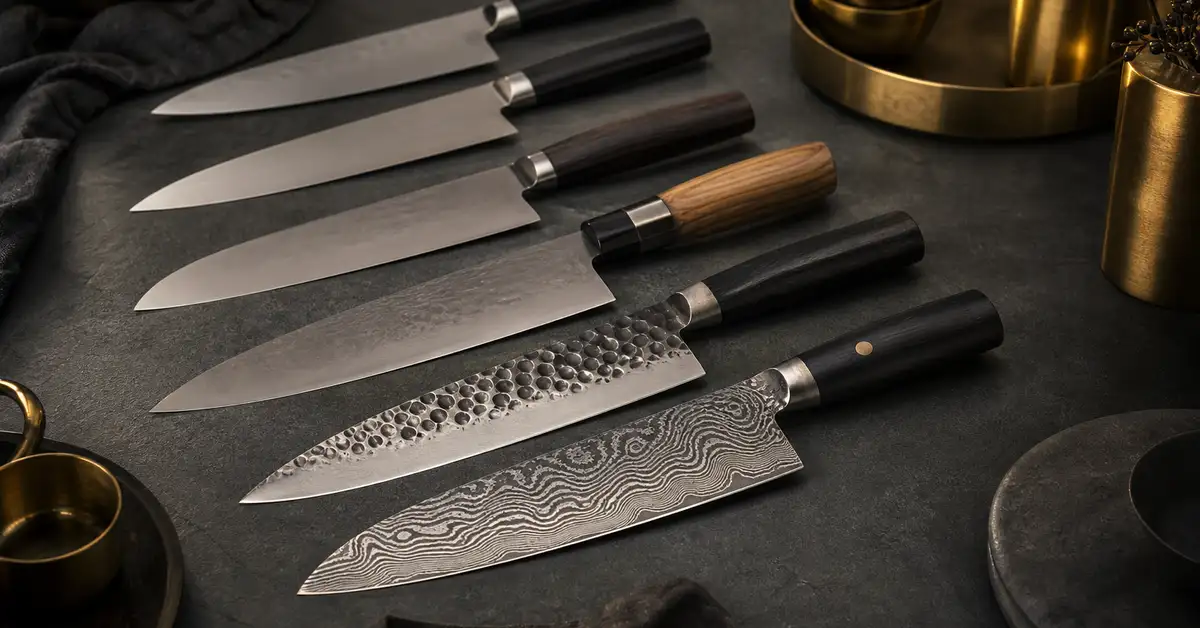
Kitchen knife brands compared
| Brand | Manufacturing | Steel / hardness | Price |
|---|---|---|---|
| Victorinox | Switzerland | Stamped / ~55–56 HRC | $25–75 |
| Mercer Culinary | Taiwan | Stamped/forged / ~53–56 HRC | under $25 |
| Wüsthof | Solingen, Germany | X50CrMoV15 / ~58 HRC | $150–300 |
| Zwilling | Germany | X50CrMoV15 FRIODUR / ~57 HRC | $150–300 |
| Made In | Thiers, France | X50CrMoV15 NITRO+ / ~58 HRC | $75–150 |
| Misen | China (Japanese steel) | AUS-10/ACUTO440 / ~58 HRC | $75–150 |
| Tojiro | Japan | VG-10 core / ~60–61 HRC | $75–150 |
| Shun | Seki, Japan | VG-MAX Damascus / ~60–61 HRC | $150–300 |
| Miyabi | Seki, Japan | VG10–SG2/R2 / ~60–63+ HRC | $150–300 |
| Global | Japan | Cromova 18 / ~56–58 HRC | $75–150 |
| Artisan Revere | United States | Elmax powder steel / ~60–62 HRC | $300–700 |
| Dalstrong | China | Varies (AUS-10V on Shogun) / 56–62+ HRC | $75–150 |
How to choose a brand
A few honest questions cut through the marketing faster than brand reputation alone:
- Where is it actually made? Brand origin and country of manufacture aren’t always the same — Misen and Dalstrong both use Chinese manufacturing behind Japanese-inspired steel and branding, which isn’t a red flag on its own, but it’s worth knowing before you pay a premium expecting Japanese production.
- Do you want forgiving or acute steel? German brands (Wüsthof, Zwilling) run tougher, more forgiving steel around 56–58 HRC. Japanese-made brands (Shun, Miyabi, Tojiro, Global) run harder, more acute steel that cuts more cleanly but demands more careful technique.
- Is a high HRC number actually what you need? Harder steel holds an edge longer but chips more easily and needs more careful handling around bones, twisting or hard boards. Don’t assume the highest number wins for your kitchen.
- How much are you paying for the name versus the steel? Some brands (Material, some Henckels lines) don’t publish a clear steel grade or HRC figure at all — a legitimate reason to ask more questions before buying at a premium price.
Frequently asked questions
What is the best overall kitchen knife brand?
There’s no single best brand — it depends on budget and style. For value, Victorinox is the standout. For traditional German construction, Wüsthof and Zwilling lead. For genuine Japanese manufacture at accessible prices, Tojiro is the value benchmark, while Shun and Miyabi lead the premium Japanese tier.
Does country of manufacture matter more than brand name?
Yes, often more than buyers expect. Brand origin and manufacturing location aren’t always the same — some brands market Japanese-inspired steel or design while manufacturing in China, which isn’t necessarily a quality problem but is worth knowing, especially if you’re paying a premium expecting Japanese production specifically.
Is a higher HRC number always better?
No. Higher hardness (measured in HRC) holds a keen edge longer but is more brittle and prone to chipping, especially with twisting, bones, frozen food or careless handling. Softer, tougher steel is more forgiving of everyday abuse. Match the steel to how you actually cook, not to the biggest number on the spec sheet.
Are budget knife brands actually good?
Yes — Victorinox and Mercer Culinary in particular are repeatedly validated by independent testing (America’s Test Kitchen has named both top picks in its budget category). A genuinely well-made budget knife often outperforms a poorly chosen premium one for everyday home cooking.
Which brands have had knife recalls?
None of the brands recommended above has an active US CPSC recall as of 2026. Calphalon’s Contemporary Cutlery line was recalled in 2017 for blade-breakage and laceration risk, and an older Farberware fruit slicer/corer was recalled in 2006 — both are worth checking if you’re buying older, discounted or secondhand stock of those specific product lines.
The verdict
If you want the safest overall pick, Victorinox and Mercer Culinary lead on value; Wüsthof and Zwilling lead on traditional German construction; Made In and Misen offer strong hybrid value; Tojiro, Shun, Miyabi and Global cover genuine Japanese manufacture from affordable to premium; and Artisan Revere and Dalstrong round out differentiated boutique and dramatic-styling options. Whichever brand you choose, look past the name to the specific model’s steel, hardness and country of manufacture — see our best chef’s knives for model-specific picks across every one of these brands.
Sources & method: Brand and construction details independently verified against manufacturer documentation (Victorinox, Mercer Culinary, Wüsthof, Zwilling, Made In, Misen, Tojiro, Shun, Miyabi, Global, Artisan Revere, Dalstrong); performance and recognition drawn from America’s Test Kitchen, Good Housekeeping, Wirecutter, Serious Eats, Food Network and specialist knife coverage. Screened against the US Consumer Product Safety Commission (CPSC) recall database; no active recalls found for the recommended brands as of 2026 (Calphalon Contemporary Cutlery, 2017, and an older Farberware slicer/corer recall, 2006, are historical and noted above). We don’t physically test knives ourselves — here’s how we choose.