Transparency first: This guide contains affiliate links. If we’re enrolled in an affiliate program, we may earn a commission at no extra cost to you — it never affects how we research or rank. Read our full affiliate disclosure policy.
A santoku is the knife most vegetable-forward cooks reach for once they’ve tried one — shorter and flatter than a gyuto, built for a straight push-cut rather than a rock-chop, and genuinely excellent at slicing tomatoes and herbs without crushing them. Below are 8 santoku knives worth buying in 2026, from a budget stamped blade to a splurge-worthy Damascus powder-steel pick. Already own a gyuto and want a dedicated vegetable knife to pair with it? You’re in the right place. Starting from scratch instead? See our best Japanese knives for the all-purpose gyuto shortlist, or our chef’s knife guide for the fundamentals.
How we chose
We’re a research-led site, not a testing lab — we don’t run our own edge-retention rigs. We built this list from current 2025–2026 testing at Serious Eats, Food Network and specialist reviews at ChefPanko and Japanese Knife Lab, plus manufacturer specifications for steel, hardness and edge geometry. Every pick below is independently confirmed as currently sold through the manufacturer or a major US retailer, and screened against the US CPSC recall database — no active recalls found for any of these knives or brands as of 2026. Prices move, so we use bands — $ (budget) to $$$$ (splurge) — and send you to the retailer for today’s number. Here’s our full method.
What makes a santoku different from a gyuto
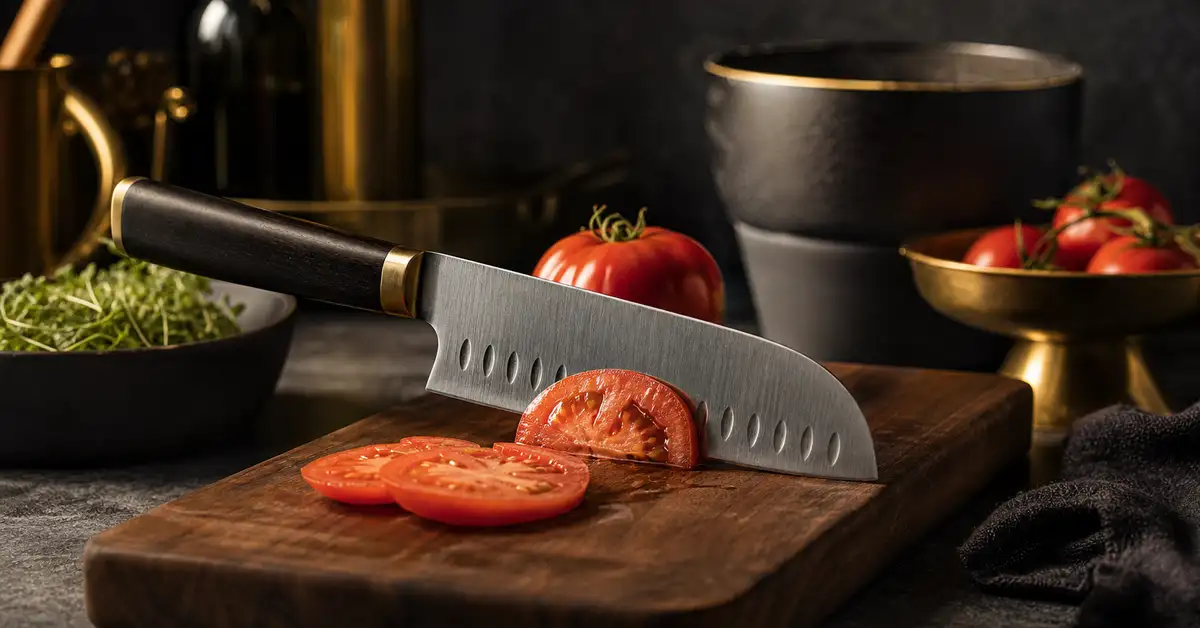
A santoku is shorter and taller than a gyuto, with a straighter edge and a distinctive sheepsfoot-style tip that drops toward the spine rather than curving up from the edge. That flatter profile is built for a push-cut — lifting the blade fully off the board between strokes — rather than the rocking motion a curved gyuto or Western chef’s knife favors. Most santoku run a double-bevel edge around 10–12° per side, more acute than a typical Western knife’s 15–20°, and an ideal weight of roughly 6–7 ounces that keeps them nimble for repetitive vegetable work. Many also feature hollow-ground scallops or a Granton edge along the blade face, which create small air pockets that stop sticky produce like potato or cucumber from clinging to the steel.
The best santoku knives of 2026
1. Mac Hollow Edge Santoku (MSK-65)
What it is: A long-standing favorite in santoku testing, repeatedly singled out as the top performer for vegetable prep thanks to its thin, sharp double-bevel edge and scalloped hollow-ground faces.
Best for: A dedicated vegetable knife for cooks who already own a gyuto or Western chef’s knife and want the single best all-around santoku.
Specs: 6.5″ blade; roll-forged chrome-moly-vanadium steel; hardness 61 HRC; 10–12° double bevel per side; hollow-ground faces; Pakkawood handle with steel bolster; about 6.1 oz.
- Pros: Repeatedly named the top santoku performer in current testing; genuinely excellent at slicing tomatoes and herbs cleanly; light, balanced feel.
- Cons: A specialist second knife, not a do-everything blade; same care needs as any hard Japanese steel.
Why we trust it: Current santoku testing singles this knife out repeatedly for cutting cleanly through rubbery tomatoes and tender herbs where other santokus struggled.
2. Tojiro DP Santoku (170mm)
What it is: A genuinely capable VG10-core santoku from one of the specialist retailers’ most recommended entry points into Japanese steel, at a price well below most competitors.
Best for: A first santoku for a cook who wants real VG10 performance without paying a premium-brand markup.
Specs: 170mm (6.7″) blade; VG10 core clad in stain-resistant steel; hardness ~61 HRC; 50/50 double-bevel grind; reinforced wood handle; about 165g.
- Pros: Genuine VG10 performance at a budget-friendly price; hair-shaving sharp out of the box; easy-care stainless cladding.
- Cons: Simpler finish and handle than premium lines; still needs the same careful technique as any hard Japanese steel.
Why we trust it: A recurring specialist-retailer recommendation as the best-value entry point into genuine Japanese steel, with reviewers consistently noting how sharp it is straight from the box.
3. Victorinox Fibrox Pro 7″ Santoku
What it is: A stamped, Swiss-made santoku that delivers most of the santoku experience — thin blade, Granton or hollow edge, comfortable grip — at a fraction of the price of Japanese-forged options.
Best for: A budget-conscious cook who wants to try the santoku shape before investing in harder Japanese steel.
Specs: 7″ blade; high-carbon stainless steel; hardness ~56 HRC; 15° double bevel per side; Granton or hollow-edge options; textured Fibrox handle; dishwasher-safe.
- Pros: Excellent value; thin blade slices easily despite softer steel; textured handle stays secure when wet; dishwasher-safe.
- Cons: Softer steel dulls faster than Japanese-brand santokus; wider 15° edge feels less acute than dedicated Japanese picks.
Why we trust it: A consistently recommended budget pick in current santoku roundups, prized for genuine performance at a fraction of premium pricing.
4. Global G-46 7″ Hollow-Ground Santoku
What it is: Global’s recognizable all-steel santoku — a one-piece steel construction with a sand-filled hollow handle for balance, and hollow-ground scallops to reduce sticking.
Best for: Cooks who want a dishwasher-tempting, all-steel santoku with a distinctive, minimalist look.
Specs: 7″ (180mm) blade; Cromova 18 stainless steel; hardness ~56–58 HRC; hollow-ground scalloped faces; sand-filled hollow-handle construction; about 6.1 oz.
- Pros: Tougher, more forgiving hardness than harder Japanese steels; well-balanced despite the all-steel build; distinctive, easy-clean design.
- Cons: Can feel unwieldy for smaller hands; the smooth steel handle is more slippery wet than a textured grip.
Why we trust it: A long-running favorite in santoku reviews, praised for holding its edge well and delivering consistently sharp, precise cuts.
5. Shun Classic 7″ Santoku
What it is: The santoku most Americans picture when they think “Japanese knife” — a VG-MAX core wrapped in visible Damascus cladding, hand-ground to a fine, immediately familiar shape.
Best for: Cooks who want a Damascus-look santoku with strong retailer support and a proven track record.
Specs: 7″ blade; VG-MAX core clad in 34 layers of Damascus stainless per side; hardness 61 HRC; 16° double bevel per side; D-shaped Pakkawood handle; hand-ground and polished.
- Pros: Genuinely sharp and well-balanced out of the box; striking visible Damascus finish; strong warranty and retailer support.
- Cons: Brittle at the edge like any 61 HRC steel; a real step up in price from budget picks.
Why we trust it: Reviewers consistently describe it as light, nimble and amazingly sharp, gliding through vegetables with minimal effort.
6. Shun Classic 5.5″ Santoku
What it is: A smaller-format version of the Classic santoku, sharing the same VG-MAX steel and Damascus construction in a more compact size for smaller hands or lighter tasks.
Best for: Cooks with smaller hands, smaller cutting boards, or anyone who finds a full 7″ santoku too much knife for everyday vegetable work.
Specs: 5.5″ blade; VG-MAX core clad in Damascus stainless; hardness 61 HRC; double bevel; D-shaped Pakkawood handle; noticeably lighter than the 7″ version.
- Pros: More maneuverable for smaller hands or boards; same premium steel and construction as the larger Classic; still handles most vegetable tasks well.
- Cons: Less reach for larger produce; same brittleness and care needs as the 7″ version.
Why we trust it: Shares the same well-reviewed VG-MAX construction as the 7″ Classic, offered specifically to suit smaller hands without compromising steel quality.
7. Miyabi Kaizen 7″ Hollow Edge Santoku
What it is: A premium santoku built around a Cryodur-hardened VG10 “super steel” core wrapped in 64 layers of flower Damascus cladding — a genuine step up in both materials and finish.
Best for: An enthusiast home cook who already has good technique and wants the sharpest, most refined santoku they can reasonably maintain.
Specs: 7″ blade (65-layer Damascus construction); VG10 super-steel core; Cryodur hardened to ~60 HRC; 9.5–12° double bevel per side; hollow-edge faces; D-shaped black Micarta handle.
- Pros: Exceptional edge retention thanks to the ice-hardening process; striking flower-Damascus finish; hollow edge genuinely reduces sticking.
- Cons: A genuine splurge; the hardest, most demanding steel on this list to sharpen well at home.
Why we trust it: Reviewers specifically praise Miyabi’s Cryodur ice-hardening process for edge retention and durability that’s hard to find at this price tier.
8. Miyabi Evolution Santoku
What it is: A hybrid santoku with a Western-style contoured handle and a curved belly for rocking or push-cutting, built around hard Japanese fine-carbide steel.
Best for: Cooks who want Japanese-level hardness and sharpness but prefer a familiar Western handle shape and cutting motion.
Specs: Western-style contoured handle; curved belly profile; fine carbide stainless steel; hardness 61 HRC; supports both rocking and push-cut styles.
- Pros: Familiar Western grip and motion with genuine Japanese-level hardness; versatile curved profile suits both cutting styles; accessible mid-range pricing.
- Cons: Less of a pure push-cut santoku experience than the flatter-profile picks above; same 61 HRC care needs as any hard steel.
Why we trust it: Positioned by reviewers as an accessible entry point into Miyabi’s harder steel lineup, suited to intermediate home cooks upgrading from Western knives.
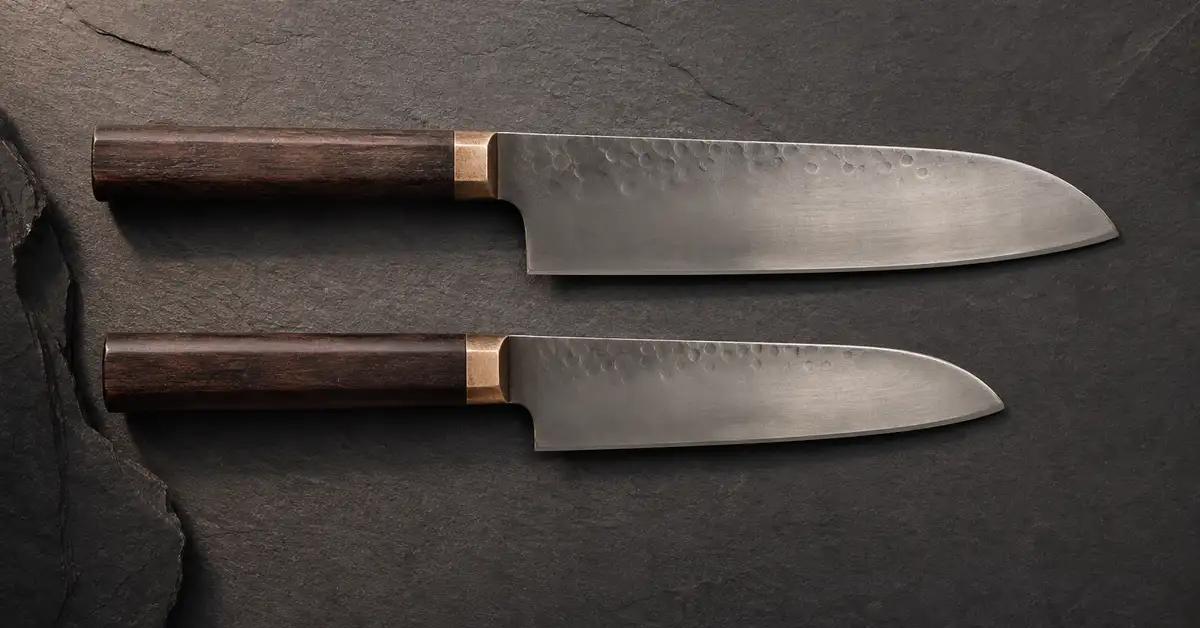
Santoku knives compared
| Knife | Steel | Hardness | Edge angle | Price |
|---|---|---|---|---|
| Mac Hollow Edge (MSK-65) | Chrome-moly-vanadium | 61 HRC | 10–12° | $$ |
| Tojiro DP 170mm | VG10 core | ~61 HRC | 50/50 grind | $ |
| Victorinox Fibrox Pro | High-carbon stainless | ~56 HRC | 15° | $ |
| Global G-46 | Cromova 18 stainless | ~56–58 HRC | Hollow-ground | $$ |
| Shun Classic 7″ | VG-MAX / Damascus | 61 HRC | 16° | $$$ |
| Shun Classic 5.5″ | VG-MAX / Damascus | 61 HRC | Double bevel | $$$ |
| Miyabi Kaizen | VG10 super steel | ~60 HRC | 9.5–12° | $$$$ |
| Miyabi Evolution | Fine carbide stainless | 61 HRC | Double bevel | $$$ |
How to choose a santoku
A few honest questions narrow the field faster than any spec sheet:
- Is this your first Japanese knife or a second one? If you already own a gyuto, a dedicated santoku like the Mac or Tojiro rounds out your vegetable prep. If it’s your first Japanese knife, consider whether a gyuto’s rocking motion might suit you better.
- How much do you actually chop vegetables? The santoku’s flat profile and push-cut design shine on tomatoes, herbs and produce, but it’s less suited to rocking through a large squash the way a curved gyuto is.
- Western handle or Japanese wa-handle feel? Most santoku here use a Western-style D-shaped handle, which feels immediately familiar. The Miyabi Evolution’s contoured Western grip suits cooks who want Japanese steel without any handle adjustment.
- Budget or splurge? The Victorinox and Tojiro deliver genuine santoku performance at accessible prices; the Miyabi Kaizen is for cooks who want the sharpest, longest-lasting edge and don’t mind paying for it.
Frequently asked questions
What is a santoku knife best used for?
A santoku excels at push-cutting vegetables, herbs and boneless proteins into clean, even slices. Its flatter profile and shorter, taller blade make it especially good at slicing tomatoes and other produce that tends to stick or crush under a duller or curved edge.
Do I need both a santoku and a gyuto?
Not necessarily, but many cooks find the pairing useful: a gyuto for all-purpose rocking cuts and larger tasks, and a santoku as a dedicated vegetable knife. If you only want one knife, a gyuto is generally the more versatile starting point — see our best Japanese knives.
What’s the difference between a hollow-edge and a plain-edge santoku?
A hollow-edge (or Granton-edge) santoku has small scalloped indentations along the blade face that create air pockets, reducing suction and helping sticky foods like potato or cucumber release from the blade more easily. A plain-edge santoku lacks these but can be simpler to sharpen since there’s no scalloping to work around.
What size santoku should I buy?
7 inches is the standard size and suits most home cooks. A 5.5-inch santoku is worth considering for smaller hands, smaller cutting boards, or lighter everyday tasks, without giving up the same steel quality on premium lines.
Can a beginner use a santoku as their only knife?
Yes, though most editorial guidance suggests a gyuto or Western chef’s knife as a more versatile single knife for a beginner, since it handles a wider range of tasks including rocking through larger or tougher ingredients. A santoku makes an excellent primary knife for cooks who mostly prep vegetables.
The verdict
If you want the single best all-around santoku, the Mac Hollow Edge is the safest, most-tested pick. On a budget, the Tojiro DP and Victorinox Fibrox Pro both deliver genuine santoku performance without the premium price. If you want the Damascus look with strong retailer backing, the Shun Classic in 7″ or 5.5″ is hard to beat, and enthusiasts ready to invest in the sharpest possible edge should look at the Miyabi Kaizen. Whatever you choose, pair it with the right board and sharpener — see our best cutting boards and our best whetstones for the rest of a complete setup.
Sources & method: Performance and ranking claims drawn from Serious Eats and Food Network’s 2025–2026 testing, and specialist reviews at ChefPanko and Japanese Knife Lab; specifications independently verified against manufacturer and specialist-retailer product pages (Mac Knife, Tojiro/ChefKnivesToGo, Victorinox, Global Cutlery, Shun/Kai USA, Miyabi/Zwilling). Screened against the US Consumer Product Safety Commission (CPSC) recall database; no active recalls found for the recommended knives or brands as of 2026. We don’t physically test knives ourselves — here’s how we choose.